

We are only 9 days into Operation Epic Fury/Roaring Lion. Here’s what you need to know.
Tel Aviv and central Israel residents are spending their days running in and out of bomb shelters as Iranian and Hezbollah missile barrages continue to rain down over the country. People in the Haifa area are also dealing with a lot of missiles as well. Israelis are severely sleep deprived, struggling to function after nights of repeated alerts — including back-to-back sirens around 1 a.m. last night. Wednesday night we had three sirens in a row between 2 and 3:30 am. Some civilians have been injured not from direct missile strikes, but from falling debris or shrapnel when they failed to reach a protected space in time. In one incident in Rishon LeZion, a woman in her 40s was moderately injured when debris struck her in the head. In central Israel people are dealing with 6 – 10 sirens and alerts a day, running into the shelter every half hour or every hour and then sometimes having some time in between. It’s very stressful.
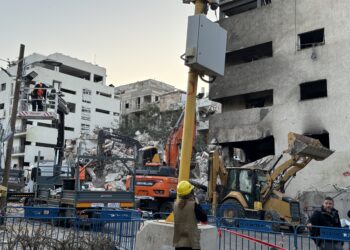
Across central Israel, impacts and interception debris were reported in cities like Tel Aviv, Holon, Or Yehuda, Yehud, and Petah Tikva as emergency crews rushed to multiple scenes. Two foreign construction workers were killed in Yehud after shrapnel from an interception strike hit their worksite. In Or Yehuda, a man was seriously injured when a missile struck a road in a residential neighborhood while he was outside a protected area. Several others were hurt while running to shelters, and at least two people were treated for anxiety during the attacks. In Tel Aviv itself, interception debris lightly injured two residents as fragments fell across the city. Israel Daily News CEO and founder Shanna Fuld was out for a run when Hezbollah sent a rocket to and watched it intercept over her head. While sprinting toward the nearest hotel to get to shelter, she saw a photo afterward of the warhead that never exploded and landed right where she had been jogging.
*
Israeli police and bomb squads are handling unexploded debris across the region while urging the public not to approach impact sites. The missile barrage is part of Iran’s broader campaign that has already included hundreds of ballistic missiles and thousands of drones launched since February 28, according to U.S. Central Command. At the same time, US central command also known as CENTCOM issued a rare warning to Iranian civilians, saying the regime is launching weapons from populated cities like Isfahan and Shiraz and that it was problematic because the US would be returning fire to the launch site. This is totally something that Israeli defense officials deal with and have been dealing with for decades. Firing back into Gaza or Lebanon toward places that had initially sent out the fire and were civilian places. In Gaza, Hamas often sends missiles out from schools and hospitals so that the IDF will either not respond or look like terrible soul-less people for firing onto these civilian spots.
Now the US is dealing with the same thing.
*
On the U.S. front, a seventh U.S. service member has now died from injuries sustained during Iranian attacks on American forces in the region.
26-year-old U.S. Army Sergeant Benjamin Pennington was his name. Pennington was from Glendale, Kentucky, and served with the Army’s 1st Space Brigade based at Fort Carson, Colorado. He was seriously wounded on March 1 when Iranian forces attacked Prince Sultan Air Base in Saudi Arabia, where U.S. troops are stationed. After a week in critical condition, he died from his injuries on Sunday, March 8th according to the Defense Department.
Pennington had enlisted in the Army in 2017 and served in a unit that helps manage missile warning systems, satellite communications, and GPS support for U.S. forces. Again, his death brings the total number of American service members killed in the conflict to seven.
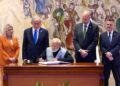
Vice President JD Vance addressed the loss during a speech in Washington, asking Americans to pray for the fallen soldiers and their families as the country continues to grapple with the war in the Middle East.
*
The escalating war is also shaking global markets, with oil prices jumping above $100 a barrel as fears grow over disruptions to Middle East energy supplies. People on the ground are already feeling it, with one of our team-members in the Philippines reporting to me that gas prices there are through the roof.
According to new reports, the United States is now considering deploying special forces inside Iran to secure the country’s stockpile of highly enriched uranium. Intelligence officials believe the uranium — buried beneath the Isfahan nuclear site — could still potentially be retrieved, and that’s something that the US and Israel are actively trying to prevent.
*
At least seven people were injured in central Israel after Iran launched a missile barrage that included a cluster munition, scattering fragments across populated areas. Emergency teams treated victims suffering from shrapnel wounds and injuries sustained while running to shelters, including a 40-year-old man listed in serious condition. Firefighters and rescue crews responded to several fragment impact sites as debris damaged nearby structures. The Israeli Air Force also intercepted a drone near the northern border, while artillery fire during the interception effort caused minor damage to homes but no injuries. Since the start of the war with Iran, more than 1,600 Israelis have been hospitalized, with dozens still receiving treatment for injuries from missile attacks.
*
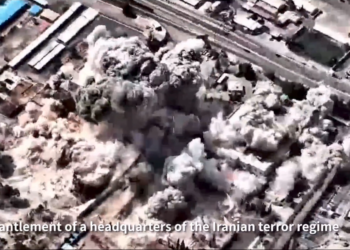
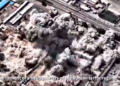
For the first time since the start of the war with Iran, the Israeli Air Force began striking Iranian oil infrastructure in Tehran late Saturday night into early Sunday morning. The strikes mark a significant escalation, targeting facilities tied to Iran’s energy sector and military logistics. International reporters in Tehran video’d black clouds of smoke hanging over the city after Israeli strikes hit multiple oil depots and fuel facilities, with residents reporting oil-soaked rain falling from the sky as toxic hydrocarbons, sulfur, and other chemicals spread through the air, forcing authorities to warn people to stay indoors due to the risk of burns and severe lung damage. The strikes are part of a broader U.S.–Israeli campaign that has hit hundreds of military and infrastructure targets across Iran, including missile launch sites, command centers, and fuel depots used by the Islamic Revolutionary Guard Corps. Iranian officials and international monitors say the war has already killed roughly 1,300 people in Iran and injured thousands, including both civilians and military personnel. Israel says it has eliminated senior commanders and severely degraded Iran’s missile and logistics networks. The opening phase of the war also killed Iran’s Supreme Leader Ali Khamenei and dozens of top commanders in strikes targeting the regime’s leadership structure. So much of that happened on day 1. With fuel distribution disrupted in Tehran, infrastructure damaged across more than 170 cities, and parts of the regime’s military command and energy supply chain under heavy bombardment, analysts say Iran is experiencing one of the most severe strategic and economic shocks the Islamic Republic has faced in decades. However, reports are out that the country and its leaders have been working to present a sunnier picture, sharing AI photos depicting a better scene than what truly is.
*
Iran’s Assembly of Experts has named Mojtaba Khamenei as the country’s next Ayatollah after an Israeli strike killed his father, former Supreme Leader Ali Khamenei, during the U.S.–Israel attack on Iran that began February 28. The leadership council met virtually during the war to approve the succession, because last week during the meeting, they were bombed. The Ayatollah holds ultimate authority over Iran’s military, political, and religious decisions, though videos circulating online show some Tehran residents openly chanting against the new leader. Reports say the new Ayatollah owns apartments in London’s Kensington neighborhood, not very far from Kensington Palace, overlooking the Israeli Embassy. Properties experts warn it could function as a surveillance position. Investigators describe this as the Iranian regime’s global property network.








Discussion about this post