

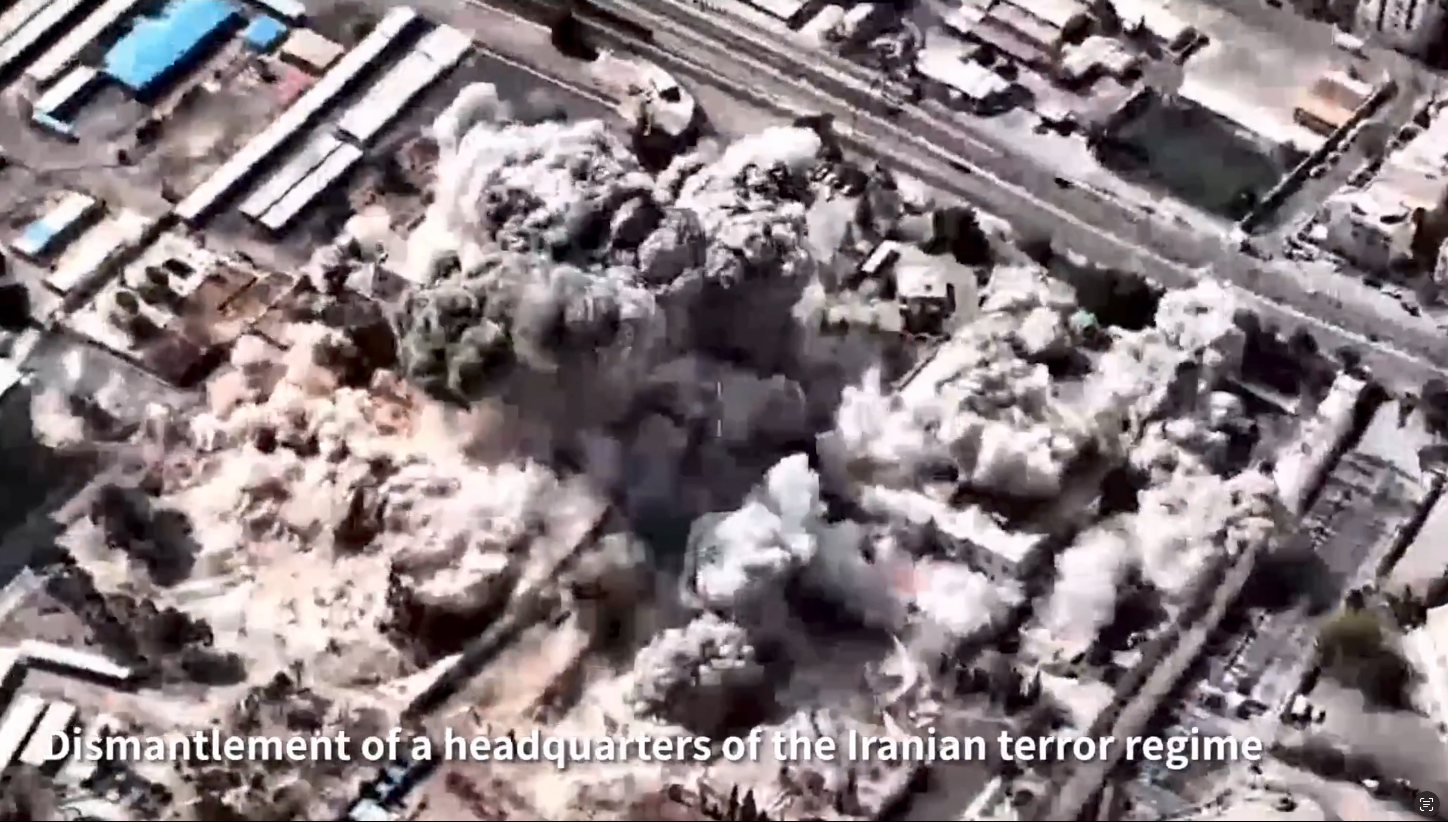
At 8:10 a.m. Saturday, February 28th, 2026, the United States and Israel launched a joint offensive on Iran, waking Israelis up shortly after with nationwide sirens urging them to brace for retaliation. Roughly one to two hours later, Iran responded to Israel with missile fire, triggering real alerts across the country. Since then, the IDF and US forces have carried out what officials describe as the largest air operation in Israel’s history.
Israel says it has dropped more than 1,200 bombs on Iranian targets, while the US reports striking around 1000 sites as part of the joint operation being called “Epic Fury” on the American side and “Roaring Lion” by Israel. The number of sites that have been targeted is still rapidly developing. President Trump shared on his social media platform TruthSocial that Epic Fury has four military objectives: (1) preventing Iran from acquiring a nuclear weapon, (2) destroying its missile arsenal and production sites, (3) degrading its proxy networks, and (4) annihilating its navy—alongside a desired political outcome of regime change from within. In his speech in the wee hours of early Saturday morning, President Trump addressed the Iranian people with “their decades-long wish,” while Prime Minister Netanyahu called on Iranians to revolt. On Saturday night alone, more than 200 Israeli aircraft struck 500 targets in two major waves — first dismantling radar systems and anti-aircraft defenses near Tehran, then targeting Iran’s ballistic missile apparatus to reduce attacks on the Israeli home front. The IDF destroyed a major launch site near the central Iranian city of Qom containing hundreds of kilograms of explosives, thwarting what it says were dozens of planned missile launches at Israel, and struck additional sites in Tabriz used to fire ballistic missiles.
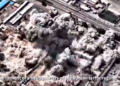
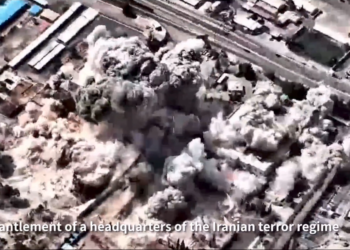
Military officials say Israel and the US are now close to achieving air supremacy over Iranian airspace, meaning Iran’s air defenses have been significantly degraded and Israeli aircraft and drones can operate with far less risk. That shift allows Israel to expand beyond defensive counterstrikes and carry out attacks on core regime infrastructure, including a headquarters in Tehran that the IDF says the regime has used to suppress and kill protesters. Compared to June 2025, when air superiority took days to establish, officials say this campaign is moving faster and more decisively.
Meanwhile, the conflict is spilling into global energy routes. A cargo ship was attacked in the Strait of Hormuz; crews evacuated safely, and no fatalities were reported. A day earlier, Iran warned shipping companies that it was closing the strait, and several major carriers have halted oil transport through the corridor, which is raising fears of a broader economic fallout. Then Iran closed it.
Iran has widened this war by firing missiles at US military bases and six more countries: Saudi Arabia, Kuwait, Qatar, Bahrain, Jordan, and the United Arab Emirates. The escalation immediately transformed the conflict from a bilateral Israel-Iran confrontation into a regional crisis with global economic implications. The Arab League condemned the IRGC, Saudi Arabia vowed action, and Gulf states began urgent consultations as fears of broader instability mounted.
Reports indicate that the ship MKD Vyom was potentially directly hit by Iranian missiles. As a result, the ship is reportedly currently spilling oil into the Strait of Hormuz. Reports are also suggesting that Iran is attempting to attack every single ship that enters the Strait of Hormuz. They are not differentiating between Israel/US-flagged ships and any other ships.
In the UAE, authorities intercepted massive waves of ballistic missiles and drones — 174 ballistic missiles, eight cruise missiles, and 689 suicide drones — though debris and several direct hits struck major sites in Dubai, including near Dubai International Airport, the Burj Al Arab, the Palm Jumeirah, and Jebel Ali Port. Three foreigners have been killed in the UAE so far. Now, flights across the UAE will be operating on a limited number of flights, with priority being given to customers with earlier bookings. Jordan has also opened its airspace and has intercepted several Iranian missiles. Israel is also expected to gradually open up its airspace beginning Wednesday, with Israeli airlines El Al, Arkia, and Israir continuing with their suspension, though El Al will be operating on a rescue mission to save stranded Israelis abroad.
With Gulf states preparing emergency meetings and oil routes under threat, the conflict has already moved far beyond Israel and Iran — and this was only day one. Six U.S. military service members have been killed, with the number expected to rise.
On the first day of Israel’s “preemptive strike” on Iran, we are talking day 1, Saturday morning, February 28th, the US and Israel killed Iran’s Supreme Leader, Ali Khamenei, in a coordinated strike targeting top regime leadership in Tehran. Israeli and American officials say the operation formed part of a broader campaign against Iran’s military and command structure at the opening of the war. The strike reportedly eliminated up to 40 senior officials, including key Revolutionary Guard and military figures. Khamenei, who ruled Iran since 1989, died as the attacks took down much of the regime’s upper command. His death marks the most dramatic escalation in the conflict and leaves Iran’s leadership structure in flux. The total number of IRGC and senior officials eliminated just within the first three days has reportedly topped around 1,000-1,500, according to a senior source familiar with the matter, who told The Jerusalem Post.
A report in The New York Times cites Iran experts who say sustained US pressure would actually embolden hardliners rather than weaken the regime. According to those analysts, the Islamic Republic has spent years preparing contingency plans and grooming replacements in the event of assassinations. The system, they argue, is designed to absorb leadership losses without collapsing. That appears to be happening now, as new figures step forward within hours of Khamenei’s reported death. However, Israel seems to be taking them down.
Iran has appointed Ahmad Vahidi as the new commander of the Islamic Revolutionary Guard Corps after Israeli strikes killed his predecessor, Mohammad Pakpour. Alireza Arafi has been appointed as the interim supreme leader. The initial assault eliminated multiple senior Iranian officials, including the Supreme Leader Ali Khamenei and top military commanders. Vahidi, the new guy in the role, is a former interior and defense minister, previously led the IRGC’s Quds Force, and now steps into one of the most powerful positions in Iran amid the escalating conflict. Argentina has long sought his arrest for alleged involvement in the 1994 bombing of the AMIA Jewish community center in Buenos Aires, an attack that killed 85 people. Argentinians are still reeling over it some 31 years later, but Tehran denies their involvement in this large-scale antisemitic attack.
A former defense minister and longtime IRGC commander since the late 1980s, Vahidi rose rapidly in recent months despite previously operating below Iran’s top tier.
Iran’s government now enters a transitional phase. President Masoud Pezeshkian and Chief Justice Mohseni Ejei are overseeing state affairs. This is all while the Assembly of Experts pulls itself together to select a new supreme leader. Former Iranian President Mahmoud Ahmedinjad was also eliminated in Saturday’s strikes.
Despite this, Iranians within Iran and around the world are celebrating the death of Khamenei and thanking President Trump and Prime Minister Netanyahu for their leadership. Netanyahu has encouraged Iranians to revolt to the streets, despite a nationwide internet blackout.










Discussion about this post