

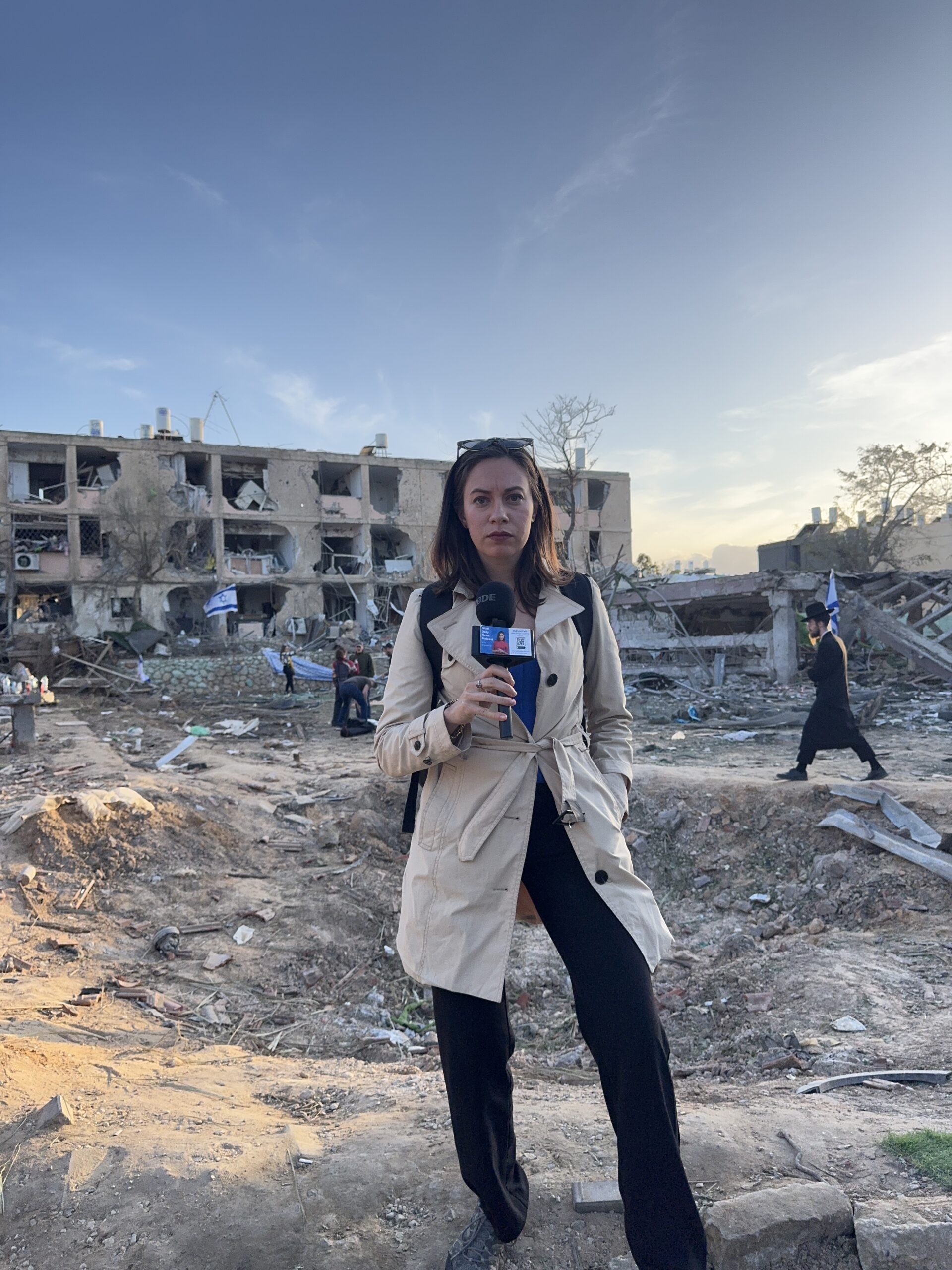
As reports emerge of possible U.S.–Iran ceasefire talks—with Donald Trump announcing a five-day pause on American strikes and Iran publicly denying negotiations—the situation on the ground in Israel tells a far more immediate story: one of impact, injury, and urgency.
On Sunday, March 22nd, 2026, the Israel Daily News team spent the day moving from site to site across the country, documenting the aftermath of Iranian missile strikes. What began as a routine reporting plan quickly turned into a high-intensity, multi-location field operation—marked by sirens, shelters, and scenes of destruction that are difficult to fully process in real time.
A Day That Started With a Decision
The day shifted early. Plans changed. Within an hour of coordinating coverage in southern Israel, a siren sent the team into a nearby shelter. Gear in hand—including cameras and even a yoga mat brought for the possibility of roadside sheltering—the reality of wartime reporting set in before the first site was even reached.
When the team emerged, news broke that cluster munitions had struck Tel Aviv.
First Stop: Tel Aviv Cluster Strike
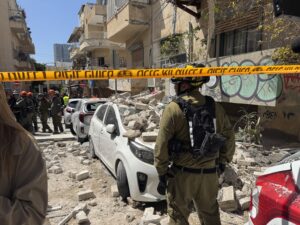
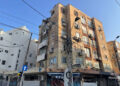
On the way out of the city, the crew stopped at a home directly hit by a cluster munition. Unlike a standard missile, cluster weapons disperse multiple explosive fragments across a wide area—making them harder to intercept and more dangerous for civilians.
At this site, the destruction was strangely precise: one home obliterated from the inside out, while neighboring buildings stood largely intact.
Southbound: Arad and Dimona
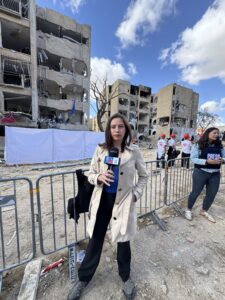
From Tel Aviv, the team continued south toward the Negev, where two ballistic missiles had struck residential neighborhoods overnight.
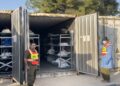
Nearly 200 people were injured in the attacks on Arad and Dimona, including many children. Victims were transported to Soroka Medical Center in Be’er Sheva, where the incident was declared a mass casualty event.
The strikes also landed near the Negev Nuclear Research Center in Dimona. Officials confirmed there were no radiation leaks.
Arad: A Crater in the Middle of a Neighborhood
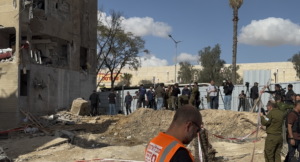
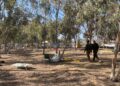
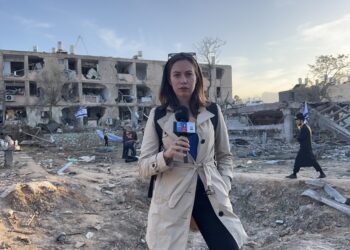
In Arad, the destruction was unmistakable. A massive crater carved through a residential block, leaving buildings torn open and entire sections of the neighborhood unrecognizable.
International media crews crowded the site. Residents—ranging from Orthodox families to immigrants and young locals—stood among the wreckage, processing what had happened.
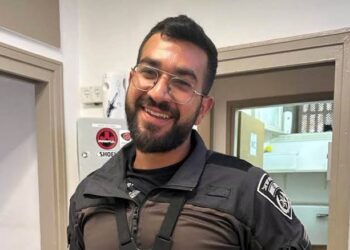
Police spokesperson Dean Elsdunne briefed reporters on the scale of the damage and the number of casualties, as emergency teams continued to secure the area. The Israel Daily News had the opportunity to speak with him.
“One of the biggest challenges, we need the area clear. These are active, very complex scenes. We asked the public not to arrive to these impact sites. It’s not a tourist attraction, but I understand people are curious and that they want to know what’s going on, but it only hinders the ability for first responders to conduct their work,” Elsdunne said.
Dimona: Shockwaves and Survival
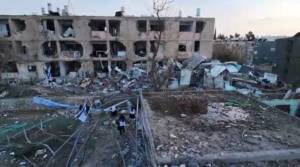
In Dimona, the damage stretched across multiple blocks. Between 50 and 80 people were injured in a direct strike on a residential area, including a 12-year-old boy in serious condition.
Families who sheltered in safe rooms survived—but not without impact. One resident described how the force of the blast sent objects flying across the room, knocking out his wife’s tooth while they were inside what is meant to be the safest space in the home.
The city’s unique population—including members of the Black Hebrew Israelite community with deep American roots—added another layer to the day’s reporting, with interviews reflecting both resilience and shock.
We spoke with a man who brought his grandpa to the destruction site, highlighting the importance of being in a shelter.
“I can say that the attitude of the people of this city has been very nonchalant because the south never gets hit like this and it really is a wake-up call to show everyone how important it is to get to a shelter.”
The grandpa then followed: ed with “Well when it hit, you could hear the vibration and the loud noise, and we knew that it was close. No one imagined this. I’ve been here for 55 years and haven’t seen anything like this.”
Reporting Under Fire
The team completed all planned stops—something that, in hindsight, felt improbable given the circumstances. The final siren of the day came not at a strike site, but at a café, sending journalists and civilians alike into a mall shelter before returning to work: editing footage, uploading content, and continuing coverage.
The ride home was quiet.
Each member of the crew processed the day differently—some with humor, some with silence, some with a sense of accomplishment. Others simply absorbed the weight of what they had seen.
The Bigger Picture
While diplomatic headlines point to possible negotiations, the reality on the ground remains volatile. According to Israeli defense reports, the IDF has destroyed approximately 330 of Iran’s 470 missile launchers so far. Israel has not officially commented on the reported U.S.–Iran talks.
But for those on the ground—residents, responders, and journalists alike—the story is not about negotiations.
It is about what happens in the moments between sirens.
And on this day, those moments were filled with impact.
Listen to the Israel Daily News Podcast for the full story with interviews.









Discussion about this post