

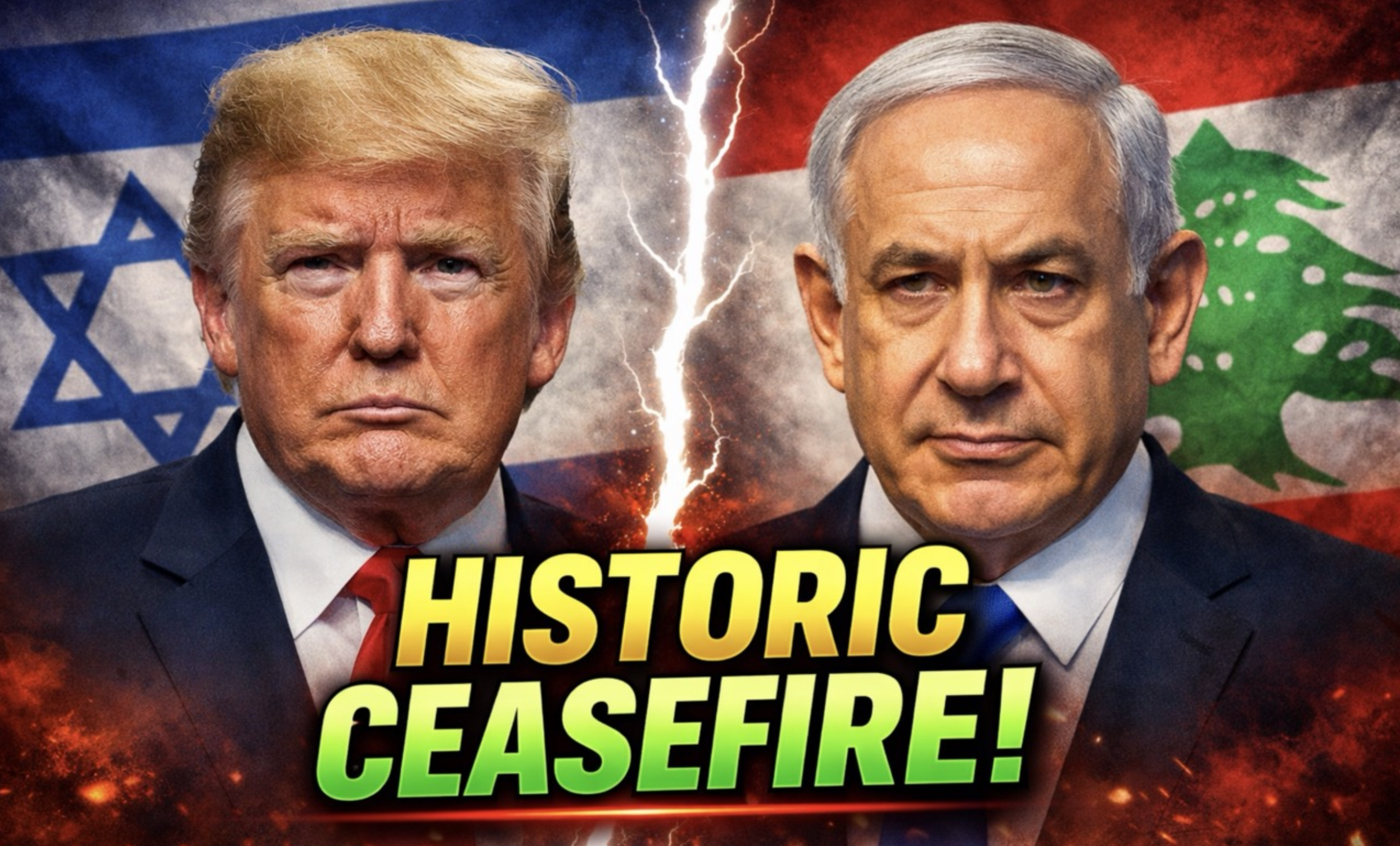
Israel and Lebanon are holding their first direct talks in decades from April 14-16, 2026, in Washington, with the U.S. mediating them. These talks are happening in the middle of an active war with Hezbollah and the Iranian regime.
As part of the framework, Lebanon demands an immediate ceasefire, and Israel has insisted on continuing its campaign against Hezbollah. Despite this, both parties have agreed to continue negotiations. Hezbollah has come out rejecting the talks entirely and refusing to accept any outcome. France was excluded from the negotiations, and that was on purpose. Israel favors U.S. only mediation and a process with more trust and less pressure.
The talks were described as “constructive.” Long-term goals are also being discussed, including the potential of a peace agreement, border security, and Lebanese state control over the southern part of the country.
Writing on his Truth Social network, President Trump said late Wednesday night that Washington was “trying to get a little breathing room” between Israel and Lebanon, as the two countries have not had formal diplomatic meetings in over 40 years.
However, it was revealed on Thursday, April 16, that Lebanese officials were “not aware” of upcoming contact with Israel, after U.S. President Donald Trump said the leaders of the two countries would speak. He did not specify who, but it was later revealed that he would be inviting Israeli Prime Minister Benjamin Netanyahu and Lebanese President Joseph Aoun to the White House. This is a big deal, and it has been a dream for many Israelis and Lebanese alike to have peace. On top of that, after the IDF withdrew from southern Lebanon in 2000, many Lebanese got stuck across the border in Israel, unable to return for the past 26 years. If a peace agreement were to happen, this can not only allow them to finally reunite with their families, but will drastically change the situation and future of the Middle East.
On Thursday, a 10-day ceasefire was agreed between Israel and Lebanon, and is scheduled to go into effect at midnight Israel time. Netanyahu told cabinet ministers via their personal phones that he agreed to the vote, and declined to hold an official security consultation to vote on the matter, but will hold one in a later stage.
“We have an opportunity to forge a historic peace agreement with Lebanon. President Trump intends to invite me and the President of Lebanon in order to try to advance this agreement,” Netanyahu said in a statement.
IDF soldiers will remain stationed at the buffer zone it currently holds inside Lebanon, which starts at the Mediterranean Sea, up to Mount Dov, and further to the foothills of Mount Hermon and the Syrian Border, and it is 10 kilometers long. It is bigger and more intense than what was previously put in place, and can block an attack on residential areas.
Netanyahu also stressed the continuous talks he has had with President Trump over the course of two days, and the two leaders said they were “tremendously determined” to continue dismantling the Iranian regime’s military and nuclear programs, and that it would drastically and fundamentally change the security and diplomatic situation for years to come.




















Discussion about this post