

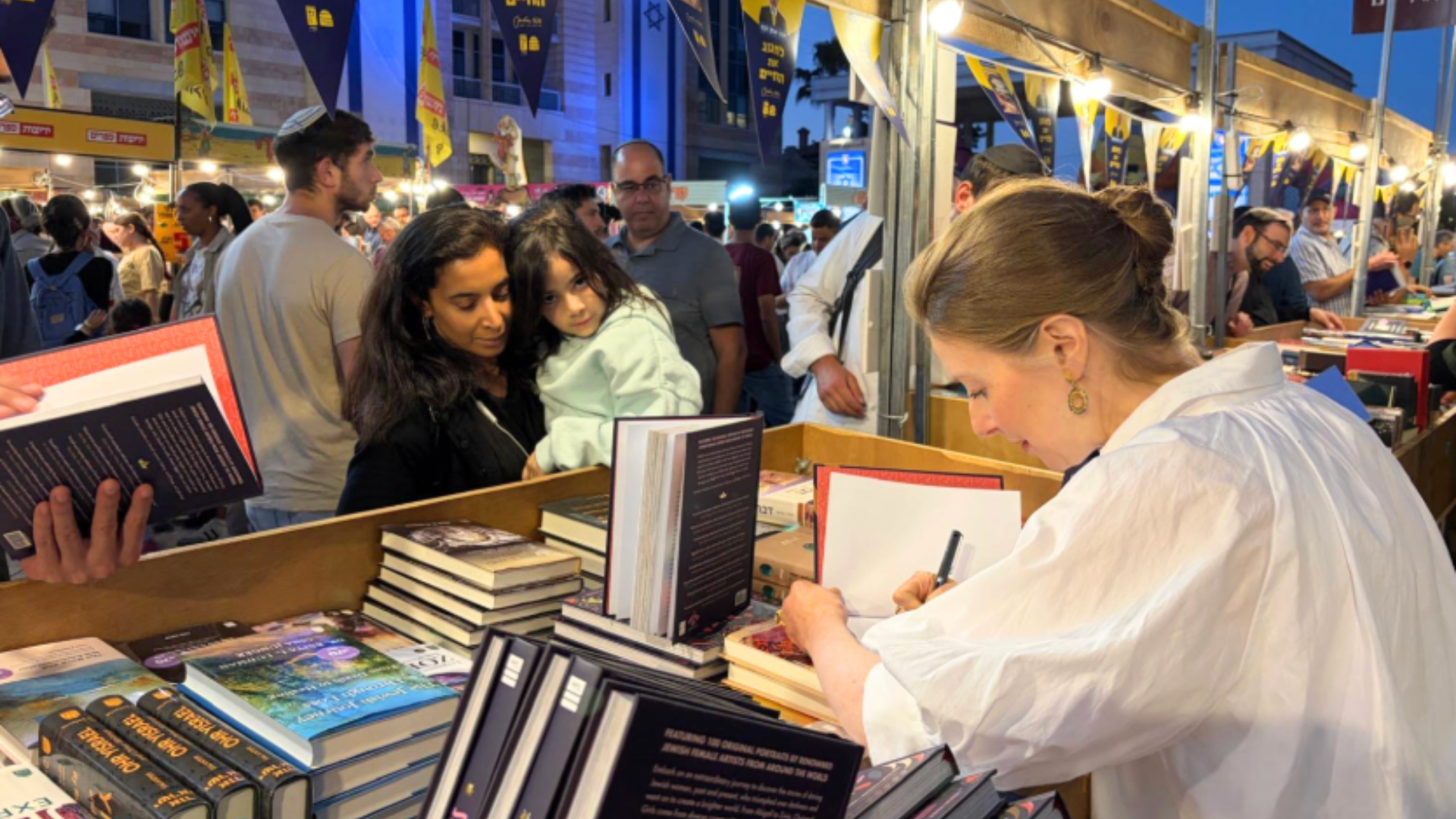
This year, Hebrew Book Week, the longstanding Israeli celebration of books, authors, and a love of reading, marked its hundredth anniversary. This event attracts about 150,000 visitors per year at its two locations in Jerusalem and Tel Aviv, uniting people in their desire to explore the world through books. The tradition began in 1926 as a one-day event on Rothschild Blvd to boost book sales in Tel Aviv. However, since then, Hebrew Book Week has expanded into a ten-day festival, with Tel Aviv and Jerusalem sights having a combined 400 booths selling books spanning genres from poetry to political memoir to children’s fantasy.
Hebrew Book Week is not merely a space to buy books; it is the only opportunity for Israelis to purchase their favourite novels directly from the publishers. The festival provides a unique opportunity for people to meet those who brought these novels to life. Attendees can have their book signed by their favourite author, share feedback with the publishers, and discover titles they cannot find anywhere else.
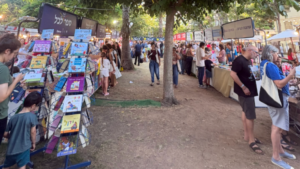
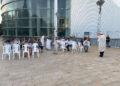
Walking into Sarona Park, the home of the Tel Aviv book festival, one is transported into another world. Endless rows of booths fill the park. Art installations line the outskirts. Children are running around the walkways, squeezing past those waiting to either get their books signed or make a new purchase.
The book selection this year covered a wide range of titles, genres, and languages. Many of the best sellers are Hebrew books, such as the novel by Barnea-Goldberg “Grandma Runs Away From Home” as well as Sharon Toshars romance novel “When the Waves Grow Stronger,” which is enjoying renewed success after the recent release of a web series adaptation of the book. Arabic novels are also some of the festival’s best-sellers, such as the Arabic edition of Maurice Sendak’s “Where the Wild Things Are.” Beyond the sale of books, the festival features plays and performances for kids, displays the work of local artists, and simply provides a space for people to come together.
One of the novels featured at both Tel Aviv’s and Jerusalem’s book week is Julie Silverstein and Tami Schlossberg Pruwer’s “Chutzpah Girls: 100 Tales of Daring Jewish Women.” The book includes one hundred short biographies of Jewish women spanning a variety of cultures and eras, with each story accompanied by a vibrant portrait illustrated by a female artist. Both Silverstein and Schlossberg Pruwer felt that their opportunity to participate in Hebrew Book Week was incredibly meaningful. Silverstein explained that when she was there, “It didn’t feel like a like a library,” she continued, saying, “It felt like a party. It felt like a festival.” For them, this festival was an opportunity to promote their book and, more importantly, their goal of telling the stories of Jewish women to a wide range of audiences. In Schlossberg Pruwer’s eyes, the festival was a success; she shared, when standing at the booth, “people came and bought it for their grandmothers or for their daughters, for their nieces… for their teachers… for their girlfriends, some even for their boyfriends.”
In a world where television and movies are booming, and people are scrolling through messages on social media, reading for pleasure has become less popular. However, Michal (Miki) Chassela, CEO of the Publishers Association of Israel, argues that reading remains. Chassela explained that studies show that six minutes of reading a day is more relaxing than other meditative strategies, such as taking a walk or drinking a cup of tea. She shared that reading is a vessel: through a book, “you go into a different place. You forget about where you are.” Schollsberg Pruwer also touched on this idea, explaining that, “Books and social media don’t have to be in competition; they can actually enhance each other.” So rather than focusing on one medium overshadowing another, it is important to determine how all platforms can coexist in harmony.
Chassela also dismissed the notion that reading is becoming less popular. She stated that “there is always this fear that people are going to stop reading.” However, the popularization of BookTok, a massive TikTok community dedicated to books, has essentially made reading trendy again. Influencers, through this platform, promote classics that might otherwise have drifted into the background, advertise the publication of new novels, and work to keep reading cool. Hebrew Book Week capitalises on this phenomenon, working to encourage young people to not only attend Hebrew Book Week but also develop and maintain a love for reading.
For Chassela, though, Hebrew Book Week is about so much more than just books. In her words, this festival is the place “where the story of Israel gets told.” The novels for sale recount these stories directly, whether it be the experiences of the hostages in Gaza or the perspective of parents of fallen soldiers. Chassela calls the festival a portrait of “Israel as a nation,” an image expressed not only through the books sold but also through the people who purchase them.In the heart of Sarona Park, Tel Aviv’s festival serves as an oasis where people from all walks of life, secular, religious, young, old, and anywhere in between, gather over a love for books and reading, but also a love for one another and a desire to live up to the Jewish namesake: the people of the book.















Discussion about this post