

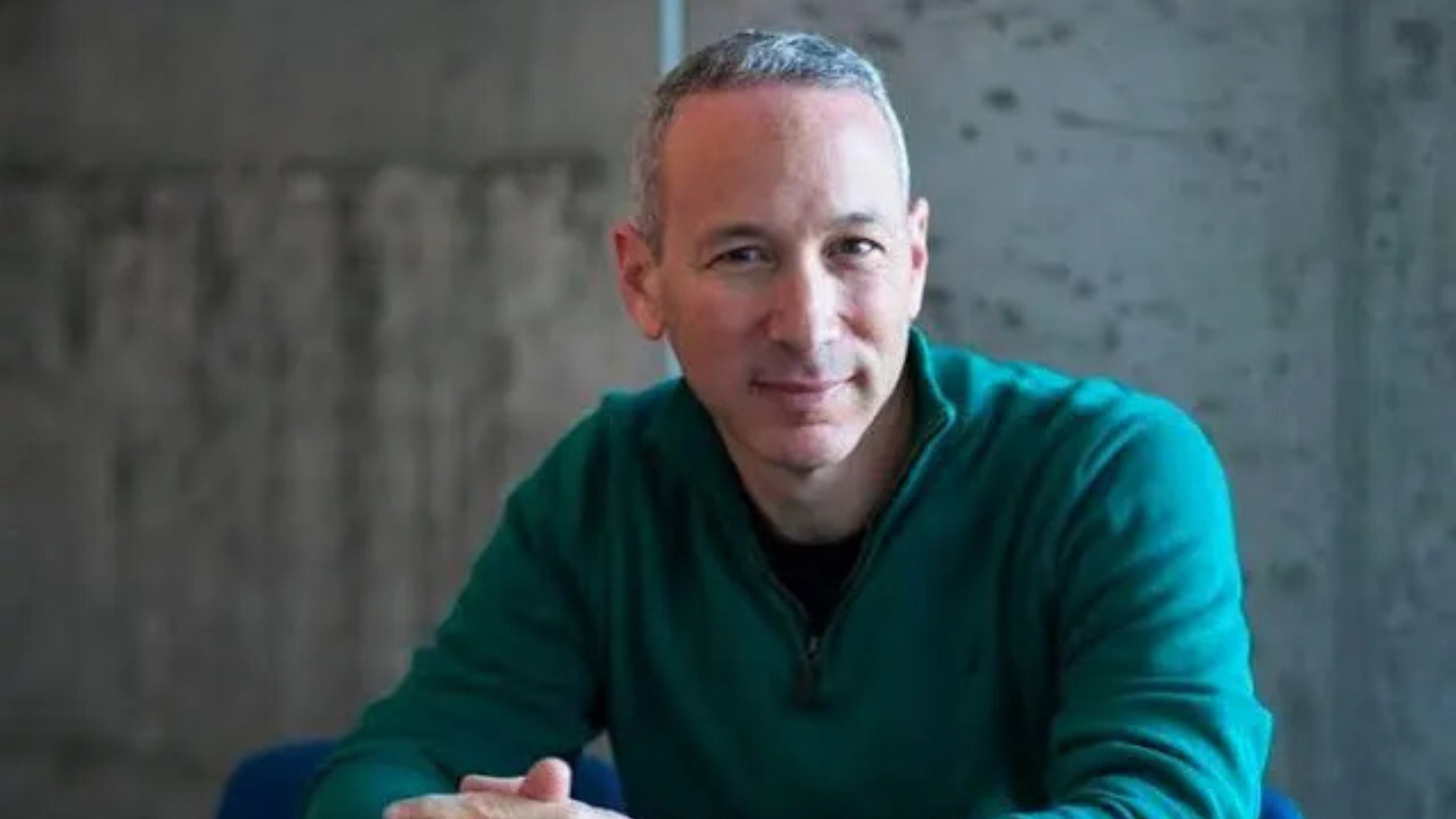
*TEL AVIV* — The room was full before the conversation even began.
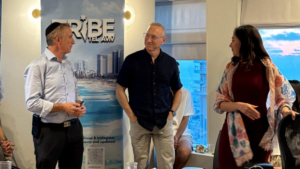
Entrepreneurs, students and technology enthusiasts in their 20s and 30s gathered Monday evening, June 29th at Tribe Tel Aviv’s latest installment of the Sunset Series program, organized by Shanna Fuld, founder and CEO of Israel Daily News.
Fuld also works as the Director of Community Engagement for the Non-Profit. The featured guest was Daniel Schreiber, CEO and co-founder of Lemonade, whose talk, “Our AI Future: Winning in an Age of Disruption,” explored what many now consider the defining technological shift of our generation.
One of the opening remarks captured the audience’s attention and quickly put things into perspective.
”Electricity took almost 100 years to transform society. ChatGPT did it in just two and a half.”
For Schreiber, artificial intelligence isn’t a technology of tomorrow—it’s already transforming nearly every aspect of modern life.
The Fastest Technological Revolution in History
Throughout the evening, Schreiber described AI as progressing at a pace unlike anything humanity has experienced before.
“Using the free version of ChatGPT today,” he declared, “is like using technology from ten years ago.”
His advice was simple: learn the tools now.
Whether it’s ChatGPT, Claude, Codex or AI agents capable of reading emails, writing code and automating complex workflows, Schreiber believes professionals who embrace these technologies will have a significant advantage over those who ignore them.
He pointed to his very own Lemonade as an example of an insurance company that has deeply integrated artificial intelligence into its operations, illustrating how AI is rapidly changing the economics of modern business.
“Insurance solves almost all problems with AI and can do it better than humans,” Schreiber said. “What used to take a person one or two days can now take AI four minutes.”.
Intelligence Without Consciousness
One of the evening’s central questions was whether there are limits to what AI can accomplish. Schreiber found language to distinguish.
Schreiber argues that AI will advance in all “commercial” spaces, emphasizing the word commercial
“The mind, body, soul consciousness is something AI doesn’t have. We don’t pay anyone to have emotions,” Schreiber reasoned.
Even so, he acknowledged that AI is becoming increasingly convincing. Emotional AI companions already provide advice, conversation and support to millions of users around the world, raising difficult questions about the future of human relationships.
“Empathy. Robots know why we are crying and can rack our brains in a way that is unsettling,” Schreiber noted.
Schreiber went on to say Argentina will create non-human corporations.
“Imagine if your next boss is AI? In the sense that it starts, raises money, and even offers you a job? Or starts a political campaign. Humans could have shares …or not have shares in the company. Huge numbers of people, a quarter of Americans, say they’ve had a deeply emotional relationship with AI. Relationships of advice. It’s hard to think of an environment where this doesn’t have Empathy. Robots know why we are crying and can rock our brains in a way that is unsettling,” Schreiber said. “Argentina will create non-human corporations. Imagine if your next boss is AI. In the sense that it starts raises money offers you even a job. Starts a political campaign. Humans could have shares or not have shares in the company. Huge numbers of people, a quarter of Americans, say they’ve had a deeply emotional relationship with AI. Relationships of advice. It’s hard to think of an environment where this doesn’t have a threat or [serve] as help.”
Rethinking Work
Schreiber suggested that today’s young generation may be the last to think about careers the way previous generations have.
Rather than seeing this as unprecedented, he compared AI to the Industrial Revolution.
Schreiber compared today’s AI revolution to the transformation of agriculture over the past century. Around 1900, roughly 41% of the American workforce was employed in agriculture. Today, less than 2% work directly on farms, a shift made possible by technological innovation that dramatically increased productivity rather than reducing food production. He argued that AI could bring about a similarly profound transformation across knowledge-based professions. Artificial intelligence, he argued, could produce a similar transformation across knowledge-based professions.
“The issue won’t be scarcity,” Schreiber explained. “The issue will be distribution.”
If AI creates enormous wealth while replacing large portions of human labor, governments and policymakers will need to rethink how economic value is shared.
Advice for Young Professionals
When asked what advice he gives his own children, Schreiber offered two recommendations.
First, pursue careers that depend on physical, genuine human interaction. Teachers, litigators, healthcare professionals, field reporters and other face-to-face professions may remain valuable longer than jobs that can be performed on a computer screen.
Second, become a builder.
Three years ago, launching a startup often required raising money and hiring engineers before an idea could become reality.
Today, AI allows entrepreneurs to build products faster than ever.
“You don’t necessarily need to know how to code,” Schreiber said. “You need vision.”
One moment that particularly stood out during the discussion came when Schreiber cited a recent statistic suggesting that approximately 15% of Americans say they have developed an emotional relationship with an AI system. The claim sparked a visible reaction from the audience and highlighted just how deeply artificial intelligence is already influencing human behavior, not only in the workplace, but in people’s personal lives. Whether used as a coach, advisor or companion, AI is beginning to occupy emotional spaces once reserved for human relationships, raising profound questions about connection, loneliness and the future of social interaction.

A Thought-Provoking Q&A
The discussion continued with a lively audience Q&A that touched on everything from employment to philosophy.
When asked whether AI is replacing jobs, including roles in sales – Schreiber acknowledged that disruption is already underway.
“If a job can be done entirely over Zoom,” he said, “it’s in danger.”
He pointed to Lemonade’s own growth as evidence that many traditional sales functions can already be automated. Yet he emphasized that opportunities will increasingly favor people who create businesses, lead teams and solve new problems rather than perform repetitive digital work.
Another audience member asked whether society risks becoming dependent on a single AI platform. Schreiber predicted a future in which multiple AI models work together, with prompts seamlessly routed across different systems instead of relying on one provider.
Questions also turned philosophical.
One attendee asked whether AI could ever truly replace empathy. Schreiber argued that while AI may become extraordinarily good at mimicking emotional understanding, authentic human relationships will retain their value.
“We may choose to pay for human connection,” he said, imagining a future where an AI therapist might cost 16 shekels ($5) while a human therapist charges hundreds because genuine human interaction will become a premium experience.
The conversation then shifted toward public policy.
Schreiber stressed that technological progress alone is not enough. Governments must prepare for a future where AI dramatically increases productivity while reducing demand for traditional labor. Concepts such as universal basic income or negative income tax, he suggested, deserve serious consideration if societies hope to distribute AI-generated prosperity fairly.
When asked whether AI itself poses an existential threat to humanity, Schreiber offered a measured response.
“I worry much more about distribution than about AI turning against us,” he answered.
Finally, the discussion turned to Israel’s place in the global AI race.
Despite Israel’s reputation as the Startup Nation, Schreiber warned that the country risks falling behind in foundational AI research — and already is.
“We’ve been fighting wars,” he said. “But this may be the biggest revolution in human history.”
He noted that the war has been a major deterrence for Israel being able to focus on the technological revolution underway. Schreiber even said that in 500 years from now, people will not remember the October 7th massacre, but would remember the shift in technology as a major turning point.
While praising Israel’s entrepreneurial culture, he argued that the nation has “lost height” on the AI front and is yet to establish itself among the global leaders building the next generation of foundational AI models. He noted it costs some $30 billion to make one
As the evening drew to a close, one message lingered with the audience: artificial intelligence is no longer a distant possibility – it is already reshaping business, education, politics and society.
The challenge now is not whether AI will change the world, but whether humanity can adapt quickly enough and if it will be distributed and regulated in a way that will benefit everyone.
The future of AI isn’t simply about faster software or smarter businesses—it may ultimately reshape what it means to be human.





















Discussion about this post