

For Israelis, flying has never been simple. You don’t just buy a ticket, pack a suitcase and go on vacation.
Especially not since October 7, 2023. Aviation has become another reflection of Israel’s geopolitical reality: foreign airlines suspend routes when security deteriorates, flights disappear almost overnight, prices rise, and Israeli passengers are left wondering not only how much their next journey will cost, but whether the airline they choose will still be flying when departure day comes around.
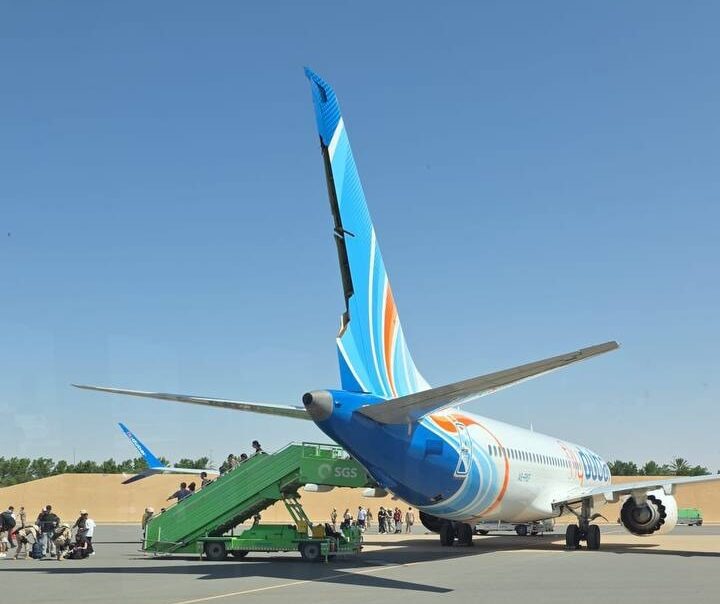
The disturbing incident aboard Flydubai flight FZ1073 from Dubai to Tel Aviv on September 30 has now introduced an even more fundamental question: How safe do Israelis feel flying with foreign airlines?
Flydubai itself confirmed that FZ1073 experienced an “incident” while en route to Tel Aviv, made a safe emergency landing in Tabuk, Saudi Arabia, and that all passengers were safe and accounted for.
According to Reuters, Israeli authorities said the co-pilot stabbed the captain and attempted to crash the aircraft before passengers and crew intervened. The precise motive remained under investigation at the time of reporting.
The fact that the flight was carrying Israelis inevitably gives the incident an additional emotional dimension in Israel. But the lesson should not be boiled down to: Everyone should fly El Al. That creates another problem.
When Security Meets Economics
El Al has continued operating during periods when numerous international carriers suspended service. And Israel maintains extensive aviation-security arrangements for flights entering and leaving the country: the Transportation Ministry says its responsibilities include security screening of foreign flights and issuing security guidelines to airlines.
El Al’s market share at Ben Gurion Airport climbed from roughly 26% in 2023 to almost 48% in 2024. Its 2024 revenue rose to approximately $3.4 billion and net profit reached about $545 million, nearly five times the previous year’s level.
Ticket prices also increased.
In February 2026, the Israel Competition Authority announced its intention, subject to a hearing, to determine that El Al had held monopoly power on flights into and out of Israel during the period it examined, from October 7, 2023 through the end of May 2024.
Its analysis of millions of ticket sales found price increases ranging from 6% to 31% on major destinations, averaging approximately 16% compared with the equivalent pre-war period. The authority announced that it intended to impose a NIS 121 million financial sanction, subject to the hearing process.
El Al has rejected allegations that it charged excessive prices, arguing that wartime aviation involved extraordinary capacity constraints, supply-chain difficulties and surges in demand when foreign airlines cancelled service.
That distinction matters. Israel needs airlines willing to continue operating during a crisis. But consumers also need genuine competition.
Nowhere was this imbalance more visible than on flights between Israel and the United States.
In the second quarter of 2024, El Al’s share of the Tel Aviv-New York market reached 88.2%, compared with 35.5% during the same quarter of 2023. Around the Jewish holidays, a round-trip ticket that had cost approximately $1,500 the previous year was reported at roughly $2,000 in 2024.
For families, students, young Israelis and Diaspora Jews who regularly travel between Israel and the United States or Europe, these are not insignificant differences.
Air travel is not a luxury for a country like Israel.
Israelis have family abroad. Jews around the world travel to Israel for weddings, holidays, study programs, business and family visits. Israelis need international connections for work and tourism. And most importantly, unlike Europeans, Israelis cannot simply drive or take a train across the border to Paris, London, Rome or Berlin.
A competitive aviation market is strategically important.
For Israeli travelers it has come down to this: Pay more and feel safer – or pay less and accept greater anxiety. That should not be the case.
Foreign carriers are essential to Israel’s connectivity. They create competition, increase seat capacity and put downward pressure on fares. Their presence also prevents Israel from becoming dependent on a handful of domestic carriers whenever hundreds of thousands of people need to travel.
Instead, the question after the Flydubai incident should be whether Israel can develop stronger and more consistent security cooperation with every airline serving the country.
Israel already supervises security arrangements concerning foreign flights entering the country. The debate now should examine whether additional measures are needed — including stronger coordination with foreign aviation authorities, appropriate vetting standards for crews serving Israel routes, improved intelligence sharing and clear security requirements that allow passengers to understand that an airline flying to Tel Aviv has met stringent standards.
Israel Needs Competition and Resilience
There is another lesson from the past three years.
Israel’s aviation system cannot depend excessively on airlines that disappear whenever the security environment deteriorates. But neither can it depend excessively on one company simply because that company remains. Both situations leave passengers vulnerable.
The healthier model is a resilient aviation ecosystem: strong Israeli carriers, foreign airlines willing and able to maintain service, robust security requirements, and enough competition to prevent prices from becoming inaccessible.
The return of international airlines after previous suspensions demonstrated exactly why this matters. As competition returned, El Al once again had to operate in a market where passengers had alternatives rather than being the default option for much of the country.
El Al and other Israeli carriers will remain crucial parts of the country’s aviation resilience. The past three years have demonstrated their importance when international carriers suspended operations. But a future in which Israelis feel they have only one realistic airline to choose from would not be healthy either.
The challenge for policymakers, regulators and the aviation industry is therefore to create something harder — but ultimately much better:
A sky that remains open to competition, affordable enough for ordinary families, and secure enough that Israelis and Jews do not have to wonder whether choosing the cheaper ticket means choosing the greater risk.





















Discussion about this post