

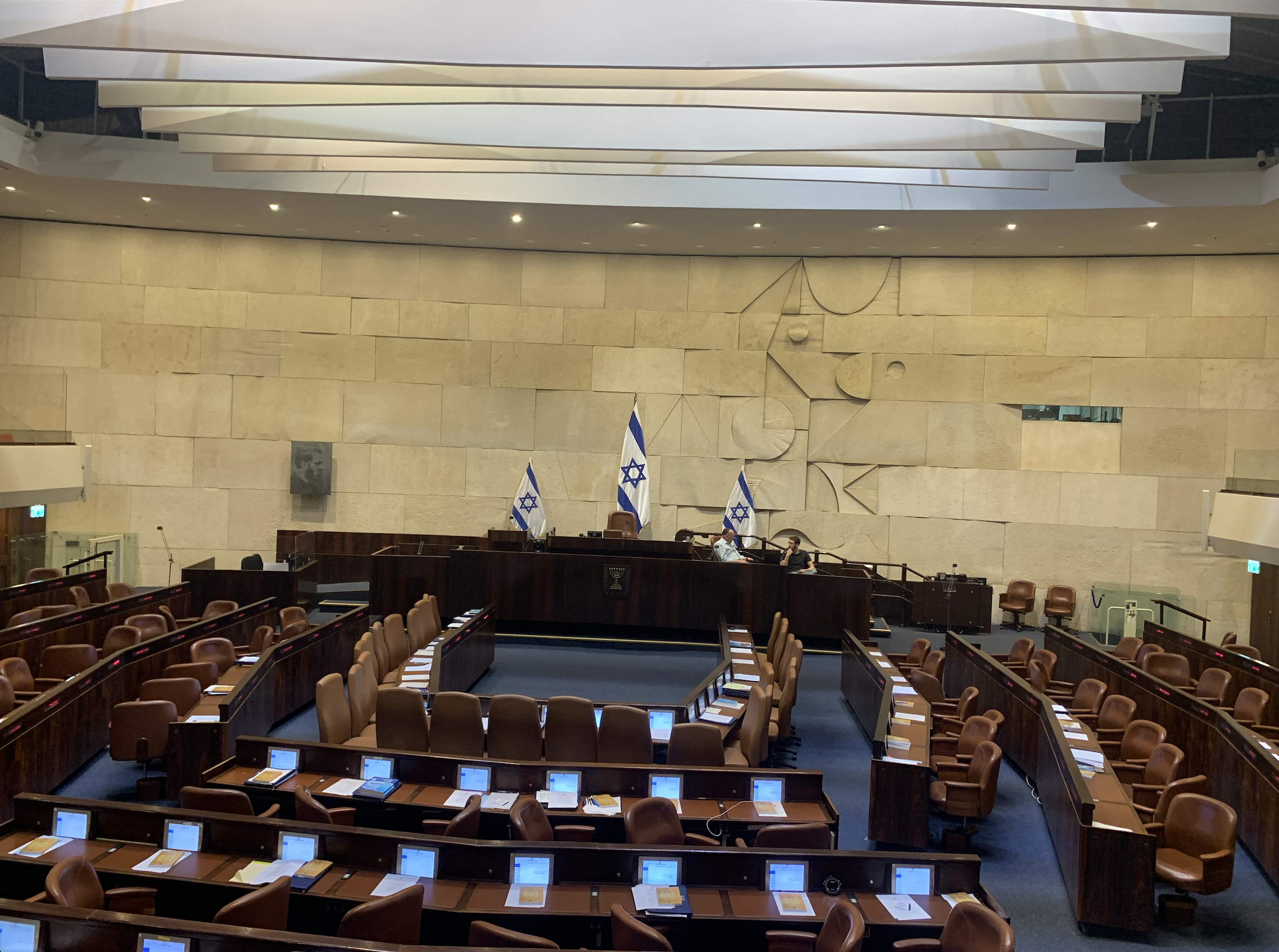
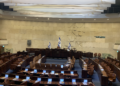
On October 27, 2026, Israel will head to its first elections since the October 7, 2023 massacre. The election comes after nearly three years shaped by October 7, the ensuing war in Gaza and conflict with Hezbollah along the northern border, direct military exchanges with Iran, handling of hostage negotiations, debates over judicial reform, economic pressures, and renewed questions about Israel’s long-term security and political leadership. After a contentious term, The Knesset officially voted to dissolve itself on July 17, 2026.
The outgoing government was formed in 2022, after Israel had five elections in a three year period after failing to form a government prior: two in 2019, one in 2020, one in 2021, and the last in 2022.
The 2026 elections will mark the first time in over 50 years that the Knesset has completed its full term, and the first time in almost 40 years that the Israeli elections have been held on their originally scheduled date. In Israel, elections are held every three to four years.
This election is expected to determine not only who governs Israel for the next four years, but also the country’s strategic direction during one of the most turbulent periods in its history.
How Israeli Elections Work
Israel is a parliamentary democracy, and instead of voting for an individual candidate, Israelis vote for a political party. Unlike many democracies where elections focus primarily on domestic policy, Israeli elections often center on a unique combination of security, coalition-building, religion and state, identity, and geopolitics.
Each party submits a ranked list of candidates before the election. Seats in parliament (called the Knesset) are distributed proportionally based on the share of the national vote. For example, if a party wins around 20% of the national vote, they will receive about 20% of the seats in the Knesset (around 24 seats). The Knesset always has 120 seats.
To enter the Knesset, a party must receive at least 3.25% of the national vote, and if a party receives less than 3.25%, it does not get any seats, and those votes are excluded from the seat allocation.
To determine who gets seats in the Knesset, Israel uses the Bader-Ofer method, a version of the internationally D’Hondt/Hagenbach-Bischoff proportional allocation system. This ensures seat totals closely match each party’s share of the vote.
Once only parties that have surpassed the 3.25% electoral threshold qualify for representation, most seats are assigned based on each party’s share of the national vote. Because seats cannot be divided into fractions, the remaining seats are distributed using the Bader–Ofer formula, which compares each qualifying party’s average number of votes per potential seat. Parties may also sign surplus-vote agreements, allowing them to combine leftover votes to improve their chances of winning an additional seat. This method helps ensure the final allocation of Knesset seats is as proportional as possible and can play a significant role in determining the balance of power and coalition-building after an election.
After the election, official results are certified, and the President of Israel consults with party leaders, then asks the MK who appears most likely to form a government to try and form a majority coalition. A coalition must control 61 out of the 120 seats to win a vote of confidence in the Knesset. No single party has ever won 61 seats, but governments are almost always coalitions of several parties.
The person who is able to form the coalition typically becomes Prime Minister, though coalition negotiations often determine who becomes prime minister.
For Israelis abroad, voting comes with a price tag. There are no absentee ballots, and many Israelis abroad have to take a flight to Israel. The only exception is for Israeli diplomats serving abroad.
A Brief History of Israel’s Political Landscape
Since Israel’s founding in 1948, its political landscape has undergone dramatic changes.
For the state’s first three decades, the country was dominated by the Labor movement under leaders such as David Ben-Gurion, Levi Eshkol, Golda Meir, and Yitzhak Rabin. Labor oversaw the establishment of Israel’s institutions, immigration waves, economic development, and the aftermath of several major wars.
A breakthrough moment occurred in 1977, when Menachem Begin’s Likud party won power in what Israelis call the Mahapach (“upheaval”), ending nearly thirty years of Labor dominance. Since then, Israeli politics has largely revolved around competition between the national camp led by Likud and various center-left coalitions.
Over time, Israel’s increasingly diverse society gave rise to numerous political parties representing religious communities, Russian-speaking immigrants, Arab citizens, environmentalists, social democrats, economic liberals, settlers, and centrists. This diversity has contributed to Israel’s highly fragmented political system, where coalition negotiations are often as important as election results themselves.
The Parties Running
Likud
Leader: Benjamin Netanyahu
Political orientation: Center-right to right-wing — National liberal, conservative, Zionist
Founded in 1973, Likud emerged from the Revisionist Zionist movement established by early Zionist pioneer Ze’ev Jabotinsky and later led by Menachem Begin. The party was created through a merger of several right-wing parties, most notably Herut and the Liberal Party.
Likud advocates for free-market economics, a strong national defense, skepticism toward major territorial concessions, and maintaining Israel’s strategic military advantage. Rather than presenting itself as a revolutionary movement, Likud emphasizes continuity, stability, and experienced governance, arguing that Israel’s complex security environment requires seasoned leadership.
Their average voter base consists of
- Center-right and right-wing Israelis
- Traditional and secular Jewish voters
- Many Mizrahi and Sephardi Jews
- Religious Zionists
- Residents of Israel’s geographic periphery
- Voters who prioritize security, economic growth, and experienced leadership
Likud is one of very few Israeli political parties that hold primaries. Primaries will be held for more than 100,000 registered voters on August 17. On July 27, 2026, a proposal was approved to grant Prime Minister Netanyahu the authority to determine eight of the first 30 slots following a vote by the Likud Central Committee. The vote also comes after Likud’s top internal court rejected a provision backed by Netanyahu that would have allowed the party to cancel its Knesset primary if there were a security escalation.
Under Netanyahu, who first became prime minister in 1996, Likud has become Israel’s dominant center-right political force.
Despite leading Israel through multiple wars and security crises, Netanyahu faces continued scrutiny over the October 7 attacks, judicial reform, corruption trials, and coalition management. Nevertheless, he remains one of the most experienced and influential political figures in Israeli history.
Together – B’Yachad
Leaders: Naftali Bennett and Yair Lapid
Political orientation: Center to center-right — Big-tent Zionist, pragmatic, liberal-conservative coalition
One of the biggest political developments ahead of the 2026 election has been the creation of Together, a joint electoral alliance between former Prime Ministers Naftali Bennett and Yair Lapid.
The alliance aims to consolidate Israel’s fragmented opposition by bringing together moderate conservatives, centrists, secular liberals, and pragmatic Zionists under one banner. Bennett contributes significant security credentials as a former Prime Minister, Defense Minister, and successful entrepreneur, while Lapid remains one of Israel’s most experienced opposition leaders and previously served as Prime Minister and Foreign Minister.
The alliance seeks to appeal to voters who support a strong national defense while advocating governmental reform, economic modernization, and a less polarizing style of leadership.
Platform:
- Strong national security and military readiness
- Continued pressure on Iran and terrorist organizations
- National unity and reducing political polarization
- Government efficiency and institutional reform
- Economic growth and lowering the cost of living
- Responsible judicial reform through broad political consensus
- Strengthening Israel’s relationships with democratic allies and regional partners
Rather than positioning itself exclusively on the political left or right, Together seeks to bridge ideological divides by appealing to Israelis who favor pragmatic governance, broad coalition-building, and a less confrontational style of politics.
Their average voter base consists of
- Moderate centrists
- Center-right voters
- Former Yesh Atid supporters
- Former Bennett supporters
- Urban and suburban professionals
- Israelis seeking new leadership while maintaining a strong security posture
- Voters who prioritize stability, competence, and national unity over ideological polarization
Yashar
Leader: Gadi Eisenkot
Political orientation: Center — Security-focused, technocratic, centrist
Yashar is among one of the newest parties contesting the election.
Founded by former IDF Chief of Staff Gadi Eisenkot, the party presents itself as a centrist movement focused on national unity, institutional reform, pragmatic governance, and security professionalism.
Eisenkot’s military reputation and relatively nonpartisan image have positioned him as one of the election’s most closely watched candidates. Polling suggests Yashar may attract voters from both the center and moderate right who prioritize national security but seek new political leadership.
A member of the War Cabinet, Eisenkot is also a bereaved IDF father. His son, Gal Meir Eisenkot, fell in combat in late 2023 during the early stages of the war with Hamas.
Unlike many Israeli parties, Yashar emphasizes professionalism and institutional competence. Eisenkot’s military background has helped the party appeal to voters who prioritize national security but are looking for new political leadership.
Eisenkot is seen as the biggest challenger to Netanyahu, as polls show both of them in close margins, with some of them showing a neck-and-neck chance.
Platform:
- Strong national defense
- Military professionalism
- National unity
- Government reform
- Institutional accountability
- Evidence-based policymaking
- Reducing political polarization
Rather than positioning itself firmly on the ideological left or right, Yashar aims to attract voters from both sides of the political spectrum who are seeking a pragmatic, security-focused alternative.
Their average voter base consists of
- Moderate centrists
- Former National Unity supporters
- Security-minded voters
- Former Likud voters dissatisfied with Netanyahu
- Israelis prioritizing competence, stability, and consensus-building
Shas
Leader: Aryeh Deri
Political orientation: Religious, socially conservative, economically center-left
Shas was established in 1984 to represent Sephardi and Mizrahi Haredi Jews, who felt underrepresented within Israel’s predominantly Ashkenazi ultra-Orthodox political establishment. The party was founded under the spiritual leadership of Rabbi Ovadia Yosef, one of the most influential Sephardi rabbis of the twentieth century. His religious authority helped transform Shas from a small religious movement into one of Israel’s most successful political parties.
Unlike many parties that focus primarily on ideology, Shas combines religious conservatism with a strong emphasis on social welfare. It advocates increased government funding for low-income families, religious schools, affordable housing, and public assistance programs while promoting traditional Jewish values in public life.
Platform:
- Preserving Jewish religious traditions and the religious status quo
- Government funding for yeshivot (religious schools) and Torah study
- Social welfare programs and assistance for low-income families
- Affordable housing and economic support for working-class Israelis
- Protecting the interests of Sephardi and Mizrahi Haredi communities
- Maintaining exemptions or accommodations for many Haredi men regarding military service
- Strong national security while generally supporting right-leaning coalition governments
Rather than defining itself primarily by ideology on diplomatic issues, Shas focuses on protecting the religious, cultural, and socioeconomic interests of its voter base. Its willingness to negotiate with different political blocs has often made it a pivotal coalition partner and one of Israel’s most influential “kingmaker” parties.
Their average voter base consists of
- Sephardi and Mizrahi Haredi Jews
- Traditional Jewish families
- Lower-income and working-class voters
- Religious conservatives
- Communities that prioritize Torah education, social welfare, and preservation of Jewish religious life
Although generally aligned with Israel’s right-wing bloc on national security, Shas has historically shown greater flexibility than some of its coalition partners. It has joined governments led by both Likud and Labor when doing so served the interests of its constituents.
Today, Shas remains one of Israel’s most influential coalition partners. Because coalition governments often require every available seat to reach a majority, Shas frequently plays the role of kingmaker during government formation.
United Torah Judaism (UTJ)
Leader: Yitzhak Goldknopf
Political orientation: Ashkenazi Haredi
United Torah Judaism is not a single political party but an alliance between two ultra-Orthodox factions:
- Agudat Yisrael
- Degel HaTorah
The alliance represents primarily Ashkenazi Haredi communities.
Unlike most Israeli parties, UTJ rarely focuses heavily on foreign affairs or diplomacy. Instead, its priorities revolve around protecting the religious lifestyle of Israel’s ultra-Orthodox population.
Platform:
- Government funding for yeshivot
- Protection of Torah study
- Religious autonomy
- Housing for Haredi communities
- Preservation of exemptions from military service
The issue of military conscription has placed UTJ at the center of Israeli politics. Following Supreme Court rulings requiring broader enlistment of Haredi men, UTJ has threatened to leave governing coalitions that support mandatory conscription.
Despite often winning fewer than ten seats, UTJ has historically exercised influence far beyond its size because governments frequently depend upon its support.
Religious Zionist Party
Leader: Bezalel Smotrich
Political orientation: Religious Zionist, national conservative
The Religious Zionist Party traces its roots to the historic National Religious Party (Mafdal), which represented religious Zionists for decades before several reorganizations eventually produced today’s party.
The party believes Jewish religious identity and Zionism should play complementary roles in shaping Israeli society.
Platform:
- Expanding Israeli communities in Judea and Samaria (the West Bank)
- Judicial reform
- Strengthening Jewish education
- Conservative family policies
- Reducing judicial intervention in government decisions
- Greater Israeli sovereignty over disputed territories
Its voter base consists largely of:
- Religious Zionists
- National-religious communities
- Many residents of Judea and Samaria
- Conservative younger voters
Smotrich has become one of Israel’s most recognizable right-wing political figures, particularly regarding economic policy and settlement issues.
Otzma Yehudit
Leader: Itamar Ben-Gvir
Political orientation: Nationalist right
Otzma Yehudit (“Jewish Power”) emerged from Israel’s nationalist right and has become increasingly influential over the past several election cycles.
Platform:
- Law and order
- Counterterrorism
- Expanding police authority
- Strengthening border security
- Tougher criminal sentencing
- Expanded civilian firearm access
- Judicial reform
Ben-Gvir built much of his political support following years of increased terrorism, civil unrest, and concerns over personal security. One of the most controversial figures in Israeli politics, he currently serves as National Security Minister. A lawyer by training, he rose to prominence through his activism on Israel’s nationalist right and has built his political platform around law and order, combating terrorism, expanding civilian gun ownership, judicial reform, and strengthening Israeli sovereignty, particularly in Judea and Samaria (the West Bank). His supporters view him as a politician willing to take a hard line on security, arguing that his policies are necessary to restore deterrence and protect Israeli civilians. Critics, however, point to his past association with the late Rabbi Meir Kahane’s outlawed Kach movement, an organization that was banned in Israel and designated as a terrorist organization by Israel, the United States, and other countries, and argue that some of his rhetoric and proposals have inflamed tensions between Jews and Arabs.
Throughout his career, Ben-Gvir has also drawn criticism from Israeli opposition leaders, human rights organizations, and some of Israel’s international allies over visits to sensitive religious sites, comments about the use of force, and positions on policing and the Israeli-Palestinian conflict. As a result, he has become one of the most polarizing politicians in Israel, admired by many on the nationalist right while remaining a focal point of criticism from both domestic and international opponents. He is widely disliked both in Israel and the United States, among many other countries.
Supporters of Otzma Yehudit argue the party prioritizes restoring deterrence and public safety.
Critics argue many of its proposals risk inflaming tensions and raising concerns regarding minority rights and democratic norms.
The party remains one of the most polarizing forces in Israeli politics.
Yisrael Beiteinu
Leader: Avigdor Liberman
Political orientation: Secular nationalist
Yisrael Beiteinu (“Israel Our Home”) was originally founded to represent immigrants from the former Soviet Union during the massive immigration wave of the 1990s.
While its voter base has broadened, many Russian-speaking Israelis continue to support the party.
Platform:
- Mandatory military service for nearly all Israelis
- Greater separation between religion and state
- Civil marriage
- Public transportation on Shabbat in some areas
- Pension reform
- Economic liberalization
- Strong national security
One of Liberman’s defining issues has been opposition to broad military exemptions for Haredi men.
This position has repeatedly prevented him from joining Netanyahu-led coalitions, despite agreeing on many security issues.
The Democrats
Leader: Yair Golan
Political orientation: Center-left, progressive
The Democrats were created through the merger of two historic Israeli political movements, Labor and Meretz.
Labor governed Israel for nearly its first thirty years and produced many of Israel’s founding prime ministers.
Meretz emerged in the 1990s as a progressive Zionist party advocating civil rights, peace negotiations, LGBTQ+ equality, and environmental policy.
The merger sought to prevent fragmentation among Israel’s center-left while creating a single progressive alternative.
Platform:
- Democratic institutions
- Judicial independence
- Civil rights
- Social equality
- Environmental protection
- Expanded public transportation
- Negotiated conflict resolution
Former Deputy IDF Chief of Staff Yair Golan has attempted to combine strong security credentials with progressive domestic policies.
Blue and White
Leader: Benny Gantz
Blue and White (Kahol Lavan) was originally established in 2019 as a centrist alliance formed to challenge Benjamin Netanyahu’s long tenure in office. The alliance brought together Benny Gantz’s Israel Resilience Party, Yair Lapid’s Yesh Atid, and Moshe Ya’alon’s Telem, quickly becoming one of Israel’s largest political forces. Although the original alliance later dissolved and evolved into National Unity, Gantz revived the Blue and White name ahead of the 2026 election following the departure of Gadi Eisenkot and other senior figures. Today, the party continues to position itself as a pragmatic centrist alternative that emphasizes security, responsible governance, and national unity.
Generally supports:
- Strong national security and maintaining Israel’s military superiority
- Pragmatic, consensus-based leadership
- National unity and reducing political polarization
- Strengthening democratic institutions
- Responsible economic management
- Moderate judicial reform through broad agreement
- Maintaining strong relationships with the United States and Israel’s international allies
Rather than appealing to the ideological left or right, Blue and White seeks to attract voters looking for experienced leadership, stability, and a centrist approach to governance. However, with the emergence of Together and Yashar, much of the centrist vote has shifted toward those newer parties, making Blue and White a significantly smaller player than it was in previous elections.
Typical voter base:
- Moderate centrists
- Former National Unity supporters
- Israelis who value experienced military leadership
- Middle-class and suburban voters
- Voters seeking political compromise and institutional stability
- Some former Blue and White voters who have remained loyal to Benny Gantz despite the party’s decline
Achdoot (Unity)
Leaders: Yuli Edelstein and Gilad Erdan
On August 6, former Likud ministers Gilad Erdan and Yuli Edelstein launched Achdoot, new right-wing party in the latest effort by former members of Prime Minister Benjamin Netanyahu’s past governments to run in opposition against him. Achdoot established itself as a right-wing Zionist coalition aimed on economic recovery, security, and settlements, but critics argue they could potentially “rein in extremists” but also include centrists. Achdoot is also opposed to the current government’s controversial efforts to weaken and restructure the judiciary, but would support a more moderate judicial reform that eases political dispute.
Gilad Erdan is a former UN ambassador and has served as public security minister, communications minister, and regional cooperations minister, among other roles. He first entered the Knesset in 2003 under Likud. Yuli Edelstein was born in the former Soviet Union and was a prominent refusenik, or Soviet Jew who was denied permission to leave. He was arrested by Soviet authorities in the 1980s for teaching Hebrew, and was released in 1987. After his release, he moved to Israel and was first elected to the Knesset in 1996 as the co-leader of Yisrael Ba’aliyah, a former right wing party that appealed to Russian speaking immigrants amid the mass migration to Israel between 1989 and 2006. In 2006, the party merged with Likud, and since, Edelstein has served in a number of positions, including Speaker of the Knesset and health minister during the COVID pandemic. Edelstein left Likud in July after decades in the party due to differences over his views surrounding the Haredi draft issue.
Arab Parties
Israel’s Arab citizens comprise approximately 21% of the population, making Arab parties an important part of the political landscape.
Unlike Jewish parties, Arab parties vary significantly in ideology.
Hadash-Ta’al
A partnership between:
- Hadash (Jewish-Arab socialist movement)
- Ta’al (Arab nationalist)
Platform:
- Workers’ rights
- Equality
- Expanded government investment
- Two-state solution
Ra’am
Leader: Mansour Abbas
Ra’am made history in 2021 by becoming the first independent Arab party to join an Israeli governing coalition.
Rather than focusing primarily on the Israeli-Palestinian conflict, Ra’am emphasizes practical improvements for Arab communities, including:
- Crime reduction
- Housing
- Infrastructure
- Education
- Economic development
Balad
Balad promotes Palestinian national identity among Arab citizens of Israel while advocating a “state of all its citizens.”
The party has frequently generated controversy over its positions regarding Israel’s Jewish character and has occasionally struggled to surpass the electoral threshold.
The Major Issues
The Legacy of October 7
The October 7, 2023 Hamas attacks fundamentally transformed Israeli politics. Beyond the immediate security failures, they shattered long-held assumptions about deterrence, intelligence, and border defense.
The attacks killed approximately 1,200 people and led to the kidnapping of 251 hostages. The resulting war has reshaped Israel’s security doctrine, foreign policy priorities, and public trust in political and military leadership.
Nearly every campaign speech is expected to address the consequences of October 7.
Gaza’s Future
One of the election’s largest unanswered questions concerns what comes after the war.
Key questions include:
- Who will govern Gaza?
- Should Israel maintain a long-term military presence?
- What role should the Palestinian Authority play?
- Should international peacekeepers participate?
- What conditions should exist before reconstruction begins?
There is broad disagreement among parties regarding these issues.
Iran
Iran remains Israel’s foremost strategic threat.
Following direct exchanges between Israel and Iran during 2024 and subsequent regional escalation, Israeli voters are increasingly focused on:
- Iran’s nuclear program
- Ballistic missiles
- Regional proxy groups
- Military preparedness
- Strategic alliances with the United States and Arab partners
Candidates differ primarily on diplomatic strategy rather than whether Iran poses a threat.
In 2026, Israel and the United States launched a joint attack on Iran that is still ongoing, with regional developments updated by the second.
Support for Oct. 7 Hostages
Although all hostages are home, the issue remains emotionally central.
Political debate continues over:
- Military pressure versus negotiated agreements
- Humanitarian considerations
- Long-term deterrence
- The responsibilities of government toward hostage families
Many former hostages have also complained about the lack of government support for them and their families.
Haredi Military Service and the Torah Study Basic Law
Perhaps no domestic issue has generated greater coalition instability.
Israel’s founding governments granted military exemptions to a small number of Torah scholars. Over decades, those exemptions expanded significantly as the Haredi population grew. In 1948, the number of people exempt from mandatory service to study Torah was just 400. Today, it is in the hundreds of thousands.
Shortly before the Knesset dissolved on July 17, a new bill was passed giving Torah study constitutional status, which could strengthen arguments for more Haredi draft exemptions and continued funding for full time Yeshiva study. For years, Israel’s Supreme Court struck down broad draft exemption laws as a result of conflicting inequality. At the same time, Israel’s High Court of Justice has been pushing the government to stop granting certain benefits for draft-eligible yeshiva students who haven’t enlisted.
Many secular and religious Zionist Israelis argue that universal military service is essential, particularly after the prolonged wars of recent years. The IDF has said that it needs thousands more soldiers, and IDF Chief of Staff Lt. Gen. Eyal Zamir has said that the IDF “could collapse” because of an “extreme lack of manpower.”
Ultra-Orthodox leaders argue that Torah study provides indispensable spiritual protection for the Jewish people and should remain protected, and many also believe that both Torah study and army service are religious obligations.
The Torah Study Basic Law is considered to be one of the most pressing issues of the election. Opposition parties have pledged to repeal it if they form the next government.
This issue has repeatedly brought governments to the brink of collapse.
Judicial Reform
The judicial reform debate began long before October 7 but remains unresolved.
Supporters argue that Israel’s Supreme Court has accumulated excessive power without a formal written constitution, allowing unelected judges to overturn government decisions and influence appointments. They contend that reform would restore authority to elected officials and strengthen democratic accountability.
Opponents counter that, because Israel has a unicameral legislature and lacks a full written constitution, the judiciary serves as one of the country’s principal checks on executive and legislative power. They warn that weakening judicial independence could reduce protections for minority rights and upset the balance among state institutions.
Although the mass demonstrations of 2023 have subsided, the underlying constitutional questions continue to shape coalition negotiations and remain a defining issue in Israeli politics.
Cost of Living
Housing affordability and the broader cost of living are expected to remain among the most important domestic issues in Israel’s upcoming election. Rising home prices, limited housing supply, expensive rental markets, inflation, and the increasing cost of everyday necessities, including groceries, utilities, childcare, and transportation, continue to place significant financial pressure on many Israeli households, particularly young families and first-time homebuyers. Campaign discussions are also likely to focus on infrastructure expansion, improving public transportation, and addressing disparities between development in Israel’s densely populated center and the geographic periphery.
Economic policy will play a central role, with debate centered on supporting Israel’s high-tech sector while ensuring that economic growth benefits a broader share of the population. Proposed solutions may include reducing bureaucracy, encouraging startups and innovation, increasing workforce participation, reforming tax policy, investing in infrastructure, and balancing economic growth with social welfare spending. Education is also expected to be a key issue, particularly in relation to workforce readiness and national cohesion. Major topics include public education funding, Haredi school curricula, STEM education, teacher shortages, civic education, and improving the affordability and accessibility of higher education.
Relations Between Different Sectors of Israeli Society, Diaspora Relations, and Foreign Policy
The aftermath of the October 7 attacks has intensified calls across much of Israel’s political spectrum for greater national unity and social cohesion. Many parties, particularly those in the political center, argue that reducing internal polarization is essential to strengthening the country’s resilience and democratic institutions. Campaign discussions are expected to focus on improving relations between secular and religious Jews, Haredi and non-Haredi communities, Jewish and Arab citizens, residents of Israel’s geographic center and peripheral regions, and Israelis from different political camps. At the same time, Israel’s relationship with Jewish communities around the world, especially in North America, remains an important issue, with debates centering on combating global antisemitism, supporting Jewish education abroad, religious pluralism, strengthening Israel-Diaspora engagement, expanding public diplomacy efforts, and fostering stronger connections with younger generations of Jews.
In foreign policy, parties continue to differ on how Israel should build upon its existing diplomatic successes while addressing regional challenges. Key issues include expanding the Abraham Accords, pursuing normalization with Saudi Arabia, deepening partnerships with Gulf states, maintaining the strategic U.S.-Israel alliance, strengthening cooperation with Europe, India, Greece, Cyprus, multiple African and South American nations, and countering Iran’s regional influence through diplomacy, security cooperation, and strategic alliances. Together, these issues reflect a broader debate over how Israel can strengthen both its internal unity and its international relationships in an increasingly complex geopolitical environment.
Governance, Constitutional Reform, and the Role of Religion in the State
The structure and functioning of Israel’s government, the relationship between religion and state, and the future of its democratic institutions are expected to remain central issues in the upcoming election. Long-standing debates continue over the role of Judaism in public life, including military service exemptions for Haredi men, public transportation on Shabbat, civil marriage and divorce, conversion standards, state funding for religious schools, and the authority of the Chief Rabbinate. These issues reflect broader questions about how Israel can balance its identity as both a Jewish and democratic state while accommodating the country’s religious, secular, and minority populations. At the same time, many Israelis are focused on improving the effectiveness and stability of government after years of political deadlock, repeated elections, and growing public distrust in state institutions.
Governance reform is expected to remain an important topic, with proposals ranging from imposing term limits on the office of prime minister to broader constitutional reforms that would further define the relationship between the executive, legislative, and judicial branches. Israel does not have a single written constitution, relying instead on a series of Basic Laws that function as its constitutional framework, and many political leaders have called for clarifying the powers of the Supreme Court, reforming the judicial appointments process, defining the role of the attorney general, and strengthening constitutional protections. Although prime ministerial term limits have been proposed by several centrist and opposition parties in recent years, the issue is not currently among the dominant campaign themes and would require broad coalition support to become law.
Electoral reform is also likely to remain part of the national conversation following six elections since 2019, with recurring proposals to raise the electoral threshold, reform coalition formation rules, modify the proportional representation system, introduce elements of regional representation, and create mechanisms that reduce the likelihood of repeated elections. Supporters argue these changes could produce stronger and more stable governments, while critics caution they could reduce political diversity and weaken the representation of smaller parties.
In addition, many Israelis are calling for stronger government accountability and institutional reform. Discussions include higher ethical standards for ministers, increased oversight of government appointments, limits on political patronage, greater transparency in public spending, and stronger independent watchdog institutions. The failures exposed by the October 7, 2023 Hamas attack have also intensified calls to modernize Israel’s civil service, improve emergency preparedness, strengthen intelligence coordination, streamline government ministries, and increase the efficiency of public services.
Parties such as Yashar have made institutional competence, professionalism, and evidence-based governance central themes of their platform, while other parties emphasize different approaches to strengthening Israel’s democratic institutions. Together, these debates reflect a broader national discussion about how Israel can build a more stable, effective, and accountable government while preserving both its democratic values and its identity as the Jewish state.
These issues often determine coalition negotiations because religious parties can become pivotal partners in forming a government.
Together, these domestic and security issues mean that the 2026 election is not simply a contest over personalities or party labels. It is a referendum on Israel’s future direction, how it will defend itself, govern its diverse society, and balance security, democracy, religion, and economic priorities in the years ahead.
As campaigning accelerates, Israelis will weigh questions that extend far beyond party politics. They will choose leaders to guide the country through an evolving regional security environment, economic challenges, domestic social divisions, and ongoing debates over the future of Israeli democracy.
Whether the next government is led by Benjamin Netanyahu or a new coalition of opposition parties, the outcome of the 2026 election will likely shape Israel’s political trajectory for years to come. Understanding the parties, their histories, their leaders, and the issues at stake provides essential context for following one of the world’s most closely watched democratic elections.

















Discussion about this post