

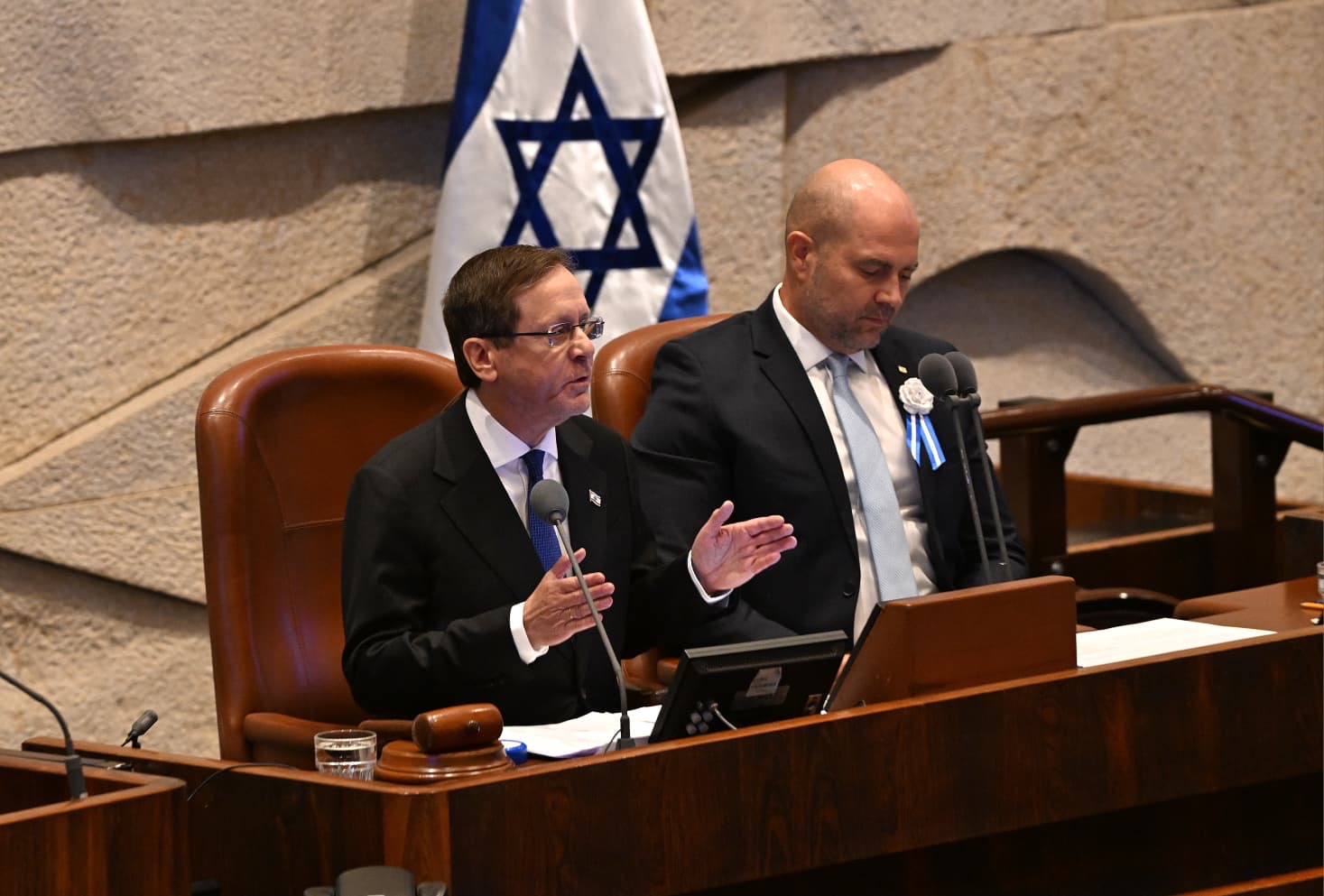
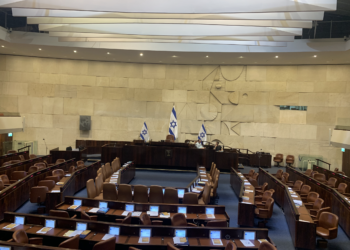
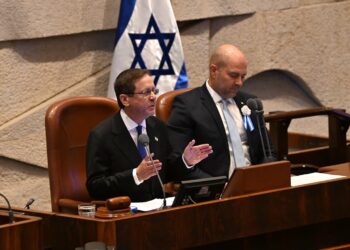
Israel’s 26th Knesset was sworn in on Tuesday, November 10, 2026, just two weeks after Israelis went to the polls in droves. All 120 lawmakers, from 11 party lists, pledged allegiance to the State of Israel at the official opening session ceremony attended by President Isaac Herzog, Prime Minister Benjamin Netanyahu and Knesset Speaker Amir Ohana.
This term, 46 new members are serving for the first time, and many of the newcomers are relatives of October 7th victims and veterans of the fighting, carrying the war with them. Some of the newcomers include Shira Shapira, the mother of October 7 victim Aner Shapira, Talik Gvili, the mother of Ran Gvili, who was the very last hostage to return from Gaza, and Elisha Madan, a wounded IDF veteran who lost both legs while fighting in Gaza, and uses prosthetics and crutches to get around. Gvili and Madan are two of Prime Minister Benjamin Netanyahu’s appointees to the Likud Party list, while Shapira is ranked #10 on Gadi Eisenkot’s Yashar party. A moving moment came when Elisha Madan stood up on both of his legs without prosthetics to honor his pledge to serve in the Knesset, and the entire Knesset, no matter what side of the spectrum, came together in unity and applauded for him.
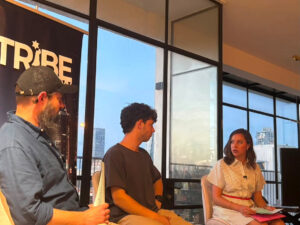
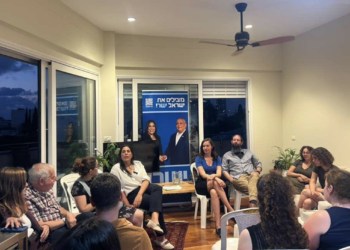
Another first timer is 24-year-old Yonatan Shalev of the Beyachad party, who is the youngest ever member to serve in the Knesset. The Israel Daily News and Tribe Tel Aviv hosted Shalev during Tribe Tel Aviv’s election series.
On November 8, Yashar leader Gadi Eisenkot was handed the mandate to form the next government by Israeli President Isaac Herzog, following a week of coalition talks. Eisenkot received 67 recommendations, while Prime Minister and Likud party leader Benjamin Netanyahu received 46, despite Likud being the largest party and having the most seats.
Eisenkot has set out four conditions for any party that wants to join his government.
One – Recognize Israel as a Jewish and democratic state.
Two – Accept the values of the Declaration of Independence.
Three – Mandatory service for everyone: military, national or civilian.
Four – Recognize Hamas as a terrorist organization and commit to dismantling its military and governing power.
Two of those conditions are what keep the Arab parties out. Eisenkot now has 28 days to form a government, with a possible 14-day extension if requested.
On day one, the Eisenkot bloc nominated Matan Kahana, a former minister and number five on Eisenkot’s Yashar party list, to replace Likud’s Amir Ohana, a close Netanyahu ally, as Knesset speaker, and submitted the first series of bills, including ones that would establish a state commission into the Hamas attacks of October 7, 2023, impose term limits on prime ministers, and repeal laws as part of the outgoing government’s judicial overhaul.
Yisrael Beiteinu head Avigdor Liberman is slated to chair the powerful Foreign Affairs and Defense Committee.
Eisenkot also met with Beyachad co-head Yair Lapid and Democrats faction leader Yair Golan, and Golan is urging the bloc to not rule out the Arab parties, and Ra’am leader Mansour Abbas says his party wants to be part of the next government.
The Haredi parties could be the swing vote: a senior United Torah Judaism lawmaker says the party will not join any government without a solution for yeshiva students. Netanyahu is calling on every Zionist party to join him in a unity government, with Netanyahu at the head as leader of the largest party.
Joint List leader Ahmad Tibi says his party will vote for Kahana because it wants to be part of the change. United Torah Judaism says it won’t help replace Ohana before a new government is formed.
Plus, in a move that no one saw coming, Aryeh Deri, leader of the ultra-Orthodox Shas party, announced on November 8, just two days before the swearing in, that he will withdraw from the party list and will not serve as a member of the Knesset this term. He will remain the party’s political leader and will oversee its direction and coalition negotiations. The announcement came days after the Shas Council of Torah Sages rejected Deri’s request to step down as party leader, following heavy losses in the October 27th election. Shas won just six seats, down from 11, its biggest blow in more than two decades. The next candidate on the Shas list will take his seat.
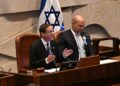
In his opening address to the new Knesset, President Herzog called for national unity, both within the government halls and across the country, and that members “must do everything” to avoid another election. He also acknowledged the Jewish diaspora and how much of Israel’s decisions have a direct effect on the diaspora.
While addressing the Knesset’s opening session separately, Prime Minister Benjamin Netanyahu was heckled by former Prime Minister and Beyachad party leader Naftali Bennett after Bennett confronted him over alleged ties to Qatar. Despite Netanyahu’s repeated calls for a unity government, his speech was downplayed by many opposition members, with many walking out in protest. As a result, Eisenkot canceled coalition talks with Likud after Netanyahu’s speech. However, Likud issued a response, calling it “puzzling” that Eisenkot canceled the meeting with Likud, despite meeting with Arab party heads, and said that Netanyahu “will turn over every stone to achieve national unity” and that it was willing to meet with members of any faction that desires unity.
If Eisenkot succeeds at forming a government, he would become Israel’s first Mizrahi Jewish prime minister and the first Israeli prime minister of non-Ashkenazi descent.










Discussion about this post