


On October 12, 2026, Barter Tel Aviv hosted an educational event to help community members better understand Israel’s parliamentary democracy ahead of the upcoming elections on October 27.
Barter Tel Aviv is a community platform where members exchange skills and knowledge. The organization regularly hosts educational sessions led by volunteers from different professional backgrounds.
The event featured Israel Daily News founder and CEO Shanna Fuld and Israel Daily News analyst Benyamin Moalem. Together, they delivered a 78-minute presentation followed by a question-and-answer session. Approximately 70 people attended. Fuld opened the event by acknowledging that Israel’s political system can be confusing, especially for Americans and recent immigrants (olim). She reassured attendees that there is “nothing to be ashamed of” when asking questions about how the government works. Moalem began by explaining Israel’s three branches of government: legislative, executive, and judicial, highlighting their differences from the American system.
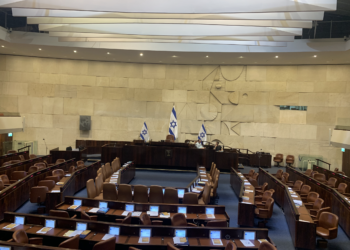
The legislative branch consists of the Knesset, Israel’s 120-member parliament, which passes laws and oversees the government.
The executive branch is led by the Prime Minister, who must maintain parliamentary support to govern. Unlike the American president, the Prime Minister relies on a coalition of political parties, typically representing at least 61 Knesset members.
The judicial branch, headed by the Supreme Court, reviews legal issues and government actions. Moalem also explained the important role of Israel’s Attorney General in advising the government on legal matters.
Another major difference is that Israel does not have a single written constitution. Instead, a series of Basic Laws establishes the country’s governmental structure and protects certain rights.
Unlike Americans, who vote for individual candidates for Congress, Israelis vote for political parties. Seats in the Knesset are distributed according to each party’s share of the national vote. To enter parliament, parties must receive at least 3.25% of the vote, generally equivalent to four seats.
Moalem then explained how governments are formed after elections. Israel’s President selects a Knesset member to attempt to form a government, usually the leader considered most capable of building a coalition.Coalition negotiations can involve several parties with different political views, requiring compromises over policies, budgets, and cabinet positions. These arrangements can also create instability. Between 2019 and 2022, Israel held five elections as political disagreements made it difficult to form and maintain governments.
The event concluded with a question-and-answer session, giving attendees an opportunity to clarify topics and better understand Israel’s political system. Throughout the presentation, Fuld and Moalem highlighted the importance of understanding how Israel’s parliamentary democracy operates, from voting and passing laws to forming governments.
While elections determine which parties enter the Knesset, coalition negotiations ultimately help determine who governs and how political decisions are made.
The session provided attendees with a clearer understanding of Israeli democracy and why its political processes remain important long after Election Day.
If you want a guide to the Israeli elections, check out our 2026 Election Guide and Amcha Israel introduction article.


















Discussion about this post