

William “Zev” Shakin, a lone IDF soldier from New York City, died by suicide Monday, August 10, after battling PTSD. A lone soldier in the Golani Brigade, Shakin chose to enlist in the IDF after seeing the raw coverage of the October 7 massacre from the U.S., dropping everything behind and heading to Israel. He had just graduated from the State University of New York at Binghamton a couple months prior.
Sergeant Shakin was 25 years old. Reports say he was struggling with PTSD, or post-traumatic stress disorder, as a result of losing his friend on the battlefield.
He fought in Gaza and lost friends, leading to deep internal struggles he seemed to deal with alone. Although there were attempts to get him help, he was never formally recognized by the Israeli Ministry of Defense as suffering from service-related PTSD.
That led him to return to the United States, where he enrolled in Yeshiva University’s School of Social Work. Friends of his say this was Will’s way of trying to move forward through the pain — by helping others. Upon returning to the U.S., his PTSD worsened, and he unknowingly came home with a fractured ankle.
He paused his life in America for three-plus years to fight for the nation of Israel when the state needed it most.
Large in size and in personality, Will was a warrior, and his friends describe him as a gift not only to them, but to Am Yisrael, or the nation of Israel.
Will was both American and Israeli. He loved fishing, hockey, skiing and skateboarding, and he was raised in a modern, yet religious household.
‘He was full of life’
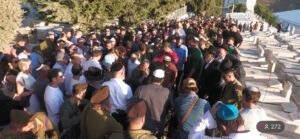
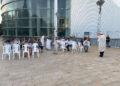
The funeral was held at Kehillat Yerushalayim in Jerusalem on Wednesday, August 12. People began gathering for the funeral at 4 p.m. Two hours later, hundreds of people were there, with about 100 standing outside of the funeral hall because they could not get in.
While mourners waited for the program to start, Israel Daily News spoke with Ben Baruch, Will’s best friend since kindergarten. The two grew up side by side and both spent time between the U.S. and Israel. Baruch was visibly emotional as he spoke about his childhood friend.
“He was full of life. There wasn’t a thing he said no to,” Baruch told Israel Daily News. “Whenever I asked him to do something, he would put down his life and come. That’s who he was. Will was a person who moved mountains for the people that he loved. We need more people like that.”
Baruch also addressed the struggles his friend faced after the army.
“I knew that Will was struggling after the army, and he lost a friend, but I never expected it to come to this, and I never expected that this would be the ending,” Baruch said in his eulogy. “I hoped that he was going to go to social work school, learn and be able to help people who were going through exactly what he was going through.”
Will was eulogized in New York before his body was flown to Israel. He was buried at the Mount Herzl Military Cemetery in Jerusalem on Wednesday, with shiva being held at the Waldorf Astoria in Jerusalem.
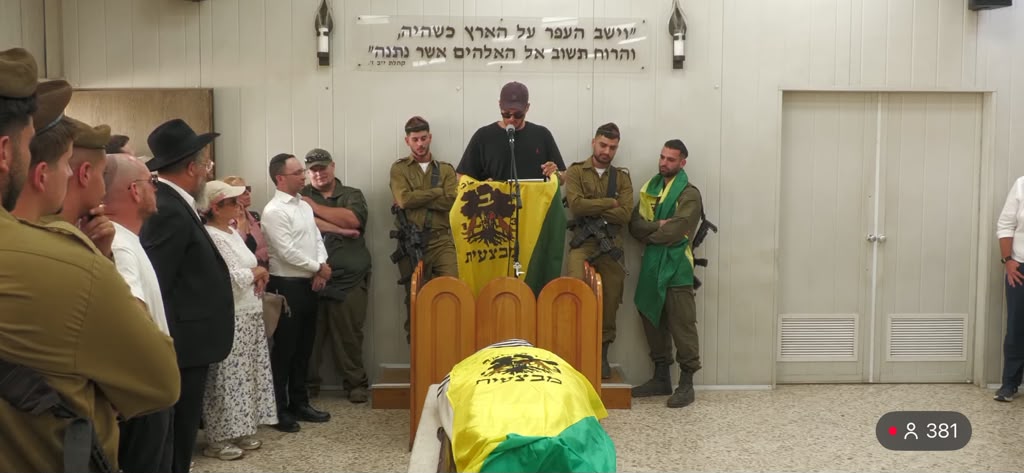
Unlike American funerals, the body was wrapped in a shroud and rested on a slab in the middle of the room. He was adorned in his Golani flag, which his brothers in arms adjusted on his body.
Some 300 people were there, including Israelis, Americans and French. Mothers, fathers, soldiers, strangers and friends. It was standing room only. There was not a dry eye in the crowd.
His parents, Eric and Karen, eulogized him in a heartbreaking message.
“Forgive me, Will, for not understanding Zev. We loved you.”
Will’s relatives echoed sentiments from the Torah, the Talmud, Pirkei Avot and that week’s Torah portion, Shoftim.
The funeral was very tough, leaving those in attendance teary-eyed and grappling with some big questions and thoughts — thoughts about the U.S.-Israel bond and how, as Jews, we could ever possibly explain why we would lay down our lives for the homeland; why some things are too heavy to bear; and whether the outside world could ever understand the Jewish struggle and what it means when we lose even one person.
What happens after a soldier dies?
For someone to be recognized by the IDF after death, they have to meet the criteria of an established Israeli legal framework.
Israel’s Defense Ministry says that when a servicemember’s death is non-operational — including illness, a traffic accident, suicide or circumstances still under investigation — the Recognition and Eligibility Unit conducts a review. It can collect investigative materials and medical records and obtain medical and legal opinions to determine whether there was a causal relationship between the death and military service.
This is crucial because Israel must decide whether or not to recognize the family for financial benefits.
There are two forms of recognition: recognition of Will himself as a fallen IDF soldier, which affects military status, burial and official commemoration, or recognition of his parents or other relatives under the Fallen Soldiers’ Families Law, which is what triggers the main financial benefits.
If the Defense Ministry’s Recognition and Eligibility Unit also approves his eligible family members under the Fallen Soldiers’ Families Law, they become entitled to the applicable bereaved-family benefits.
In a non-operational death, the key issue is normally whether the required connection between the death and military service was established.
As of February 2026, recognized bereaved parents, depending on marital status, receive either:
- NIS 9,241.02 per month for a couple of bereaved parents, approximately $3,118.84.
- NIS 7,392.82 per month for a single, widowed or divorced bereaved parent, approximately $2,495.08.
The growing psychological toll of war
According to the Israeli Defense Ministry Rehabilitation Department, about 26,200 IDF and security force personnel wounded over the past three years of war are being treated by the department, with about 17,000 being treated for psychological trauma.
The ministry says 65% of current-war patients are seeking treatment for psychological distress, including PTSD, anxiety, depression and adjustment difficulties.
Across veterans and security-force personnel from all of Israel’s wars, roughly 31,000 were dealing with mental-health injuries or PTSD as of May 2026. Out of approximately 87,000 people receiving rehabilitation services, 31,000 were mental-health or PTSD patients.
Among approximately 25,000 current-war patients at that point, roughly 15,500 — or 62% — were dealing with psychological distress, again including depression, anxiety, adjustment difficulties or PTSD.
The ministry projects that by 2028, its total caseload could reach about 100,000, approximately 50,000 of whom may have psychological issues.
Demand for the IDF’s specialist combat-trauma service has also risen considerably.
A newly published cohort study examined 4,376 veterans who approached the IDF Combat Stress Reaction Unit from 2000 through June 2024. There were 703 applicants in 2024 alone, the largest number recorded in a single year in that dataset.
What Will’s friends say about his struggle
During an interview with Israel Daily News, Baruch was asked about messages already circulating on social media claiming Will had died because of guilt over alleged actions against Palestinians in Gaza during the war.
His friends and family tell a very different story. They say Will was depressed over the loss of a friend on the battlefield and the trauma he carried home from his military service.
Israel Daily News also spoke with the mother of Will’s commander. Just weeks before Will’s death, her son visited Will in New York, where the two enjoyed New York and their time off the battlefield.
He told Will that at this point, they were good friends and not only brothers in arms.
For the people who knew Will, his story is not an abstract political argument.
It is the story of a young man who left America to fight for Israel, lost friends, returned home carrying the weight of war and hoped to turn his own pain into a career helping others.
Where to seek help
Nevut, an organization supporting lone soldiers, veterans and their families, operates a 24/7 support line.
NATAL, an Israeli nonprofit specializing in trauma caused by war and terrorism, serves both civilians and veterans. The organization reports supporting more than 545,000 civilians and veterans over its history and operates a clinical unit providing ongoing treatment to thousands of people.
If you or a loved one is struggling, please reach out for help. In Israel, ERAN’s emotional first-aid service is available 24/7 by dialing 1201.













Discussion about this post