

As the 2026 Israeli Legislative Elections are approaching on October 27, the contending parties have been engaging with prospective voters across Israel. Amcha Israel, the last newly-formed party to qualify, is one of them. Amcha Israel aims to rebrand and reshape the Israeli right.
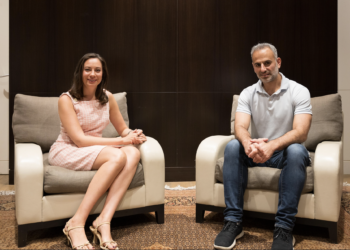
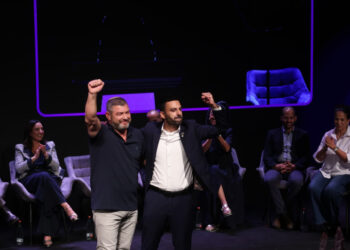
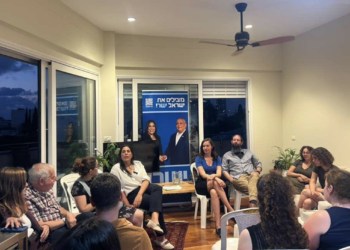
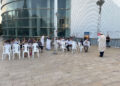
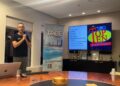
On October 5, the Tel Aviv International Salon hosted a forum with the top three contenders for the Amcha Israel Knesset Slate. Party leader Ofer Winter was joined alongside No. 2 candidate Yoseph Haddad, an Israeli-Arab Orthodox Christian and advocate, and No. 3 candidate Fleur Hassan-Nahoum, who is the former Deputy Mayor of Jerusalem and Israel’s Special Envoy for Trade and Innovation. Israel Daily News founder and CEO Shanna Fuld, who serves as the Director of Community Engagement for Tribe Tel Aviv, the sister organization of Tel Aviv International Salon, was the MC for the event.
The event highlighted the importance of Hasbara (Israeli Public Diplomacy) and why it needs changes, regional and international relations, security, and regional tensions.
Party leader Ofer Winter emphasized that his right-wing party represents a new generation of Israeli leaders who were not involved in past political failures. He stressed their commitment to change rather than maintaining the status quo, noting they were offered positions in Likud, but declined to join. Winter also acknowledged that Israel controls approximately 60% of Gaza, but progress against Hamas has stalled despite weakening the organization. He noted that 80% of Gaza’s population reportedly wants to leave, yet no immigration pathway has materialized. He then laid out a three step plan for demilitarizating Gaza:
- Separate civilians from Hamas by controlling a weapon-free zone.
- Provide essential supplies (food and water) exclusively within that zone.
- Enable direct contact with civilians and facilitate their departure to willing countries.
Winter emphasized that other countries have accepted Syrian, Libyan, and Ukrainian refugees, yet the international community has not supported similar options for Gazans. He noted the Minister of Defense had previously requested him to lead this operation nearly two years ago, but political leadership got in the way. He also mentioned that Trump had approved this approach, though it was not implemented.
Israel’s low global diplomatic standing is a barrier to Gaza population resettlement efforts. Winter argued that while Netanyahu is effective at “Hasbara” (Israeli Public Diplomacy), relying on one individual is insufficient for Israel’s image, and proposed establishing a Ministry of Hasbara with a dedicated advocacy force, comparing it to needing an entire army of frontline advocates rather than relying on a single warrior. This ministry would work to improve Israel’s international image and credibility on the global stage. “We need an army of Hasbara because this is the only way to win the war,” said party chairman Ofer Winter.
No. 2 party candidate Yoseph Haddad, who is well known in the Hasbara community and multilingual, was also present as part of the event, and laid out his vision for reshaping Hasbara. Since January 2023, there has not been a spokesperson in the public diplomacy directorate, and funding is dispersed across three major ministries: the Prime Minister’s Office, the Ministry of Foreign Affairs, and the Diaspora Ministry. His vision also includes weekly press conferences in Hebrew, Arabic, and English, confronting media lies with truth, integration into national security.
Haddad outlined using videos to expose dishonesty and influence three audience groups: pro-Israel supporters, anti-Israel supporters, and the largest group, neutral “5050” individuals who don’t strongly support either side. Arabic presentations effectively reach Arabic-speaking audiences and can shift neutral and opposing views, exemplified by an Oxford University debate where an Arabic-language opening about a Gaza incident impacted the predominantly Arabic-speaking audience.
Winter also outlined Israel’s foundational military strategy based on Ben-Gurion’s concept: rapid warfare with reserve soldiers who quickly return to civilian life. Currently, the strain across multiple fronts (Gaza, Lebanon, Syria, and Judea/Samaria) shows that this model is no longer effective.
Winter emphasized that:
- Reserve soldiers must return home to work; they cannot remain perpetually mobilized.
- Victory must be achieved quickly to maintain the reserve system’s effectiveness.
- His family, like many others, has experienced years of separation due to extended Miluim (reserve duty).
He also proposed opening dozens of military units specifically tailored to Haredi (ultra-Orthodox) religious lifestyles in order to ease IDF resource constraints. During his tenure as brigade commander and chief of staff, he successfully established two Haredi companies of 130 soldiers each, which served for years. While the IDF has opened various programs for Haredi recruitment, it continued to lack sufficient enlistees, and identified that the army did not provide Haredim with the tools to maintain their religious way of life while serving. Haddad noted positive reception from Haredi groups who appreciate the non-negative, inclusive approach rather than bashing or generalizing the community.
Haddad proposed a Hebrew Hastawat Law, a comprehensive military service reform that applies to all Israelis, not just Haredim. “You serve more, you get more; you don’t serve, you get basic rights”
The key components include
- Mandatory service exists for all Israelis, with exceptions for Arabs and the Orthodox Jewish community.
- Incentive Structure: Those who serve receive expanded rights and benefits; those who don’t receive only basic entitlements (healthcare, civic rights).
- Adapted Recruitment Centers in Blebach and Nazareth tailored to Arab and Haredi values and lifestyles.
- Three Service Track Options:
- Army service
- National service
- Exemption (for exceptional athletes or Torah scholars designated as “Eluyim Torah”)
The Defense Ministry will oversee Yeshivot (religious schools for men) compliance with enlistment requirements while cooperating with religious leadership. Winter, if appointed Minister of Defense, would integrate all Haredi programs under his ministry’s wing and monitor compliance without manipulation. The law aims to close recruitment gaps, particularly among Arab Israelis and Haredim, which Haddad framed as essential for national security and maintaining Israel’s fighting capability.
No. 3 party candidate Fleur Hassan-Nahoum discussed slow, under-the-radar normalization with Saudi Arabia post-October 2023, expecting it to mirror the initial low-level years of UAE engagement before the Abraham Accords were announced. The UAE relationship has strengthened significantly, with 12% of Israeli defense technology exports now going to the UAE. Haddad noted a 2015 UAE Foreign Minister prediction that terrorism would shift from the Middle East to Europe and the West, which is rapidly gaining ground.
“I think that what we should expect is that normalization is going to happen with Saudi, but there’s not going to be a shiny ceremony in the White House. It’s going to happen slowly.” said HassanaNahoum. “It’s going to happen under the radar. It’s going to be a little bit like what we had with the UAE for two to three years before the Abraham Accords were actually signed.” she continued.
Haddad proposed officially opening dialogue with Arab populations in Lebanon and Syria as part of the public diplomacy role, leveraging popular sentiment (e.g., Lebanese wanting to visit Tel Aviv) and the importance of promoting the proud Arab Israeli identity and combating extremism through public events linking to peace and cooperation. He shared an example of radical extremists attempting to sabotage a Nazareth conference, and outlined plans to engage U.S. Christian evangelical communities, leveraging his identity as an Arab Israeli Christian to counter hostile narratives and explain how Qatari money influences these communities, and emphasized that Israel’s status as a Jewish state is essential for democracy and security. “If Israel is another Jewish state, very, very, very, very soon we will have no have. We will have no democracy.” said Haddad.










Discussion about this post