


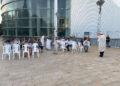
On the roof of the Alsheikh Center for Traditional Music, talented singers, emerging musicians, and a crowd of 100 guests came together in a joyful harmony. And it happened all while a warm summer’s breeze swept over the crowd in Tel Aviv’s Kerem HaTemanim (Yemenite Quarter) neighborhood surrounding Shuk HaCarmel (The Carmel Market). The occasion was the school’s end-of-year concert, which not only showcased student work, but was also a space for communal celebration through the shared language of Arabic music. People clapped along and sang the words that reminded them of their parents and grandparents, many of whom emerged from the Arab-speaking world including countries like Morocco, Syria or Turkey – for example.
Alsheikh is a music school and cultural center in the heart of Tel Aviv dedicated to the musical traditions of the Middle East. Founded in 2018 by Shimon Shai, Alsheikh promotes exposure to Eastern music from a variety of countries. The center has an overall focus on the training, research, and preservation of Eastern musical traditions – and that includes continuing to play instruments that have fallen out of focus in today’s musical landscape.
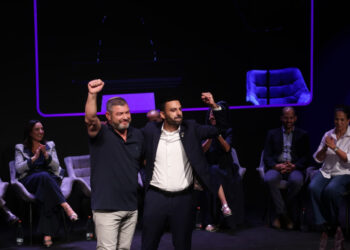
On the evening of June 30th, the school held one of its end-of-year performances. The concert was spearheaded by Ziv Yehezkel, a world-renowned Israeli singer who specializes in classical Arabic music and leads the school’s ensemble. The performance gave second- and third-year vocal track and Arabic music students a space to display the material they have been perfecting throughout the entire year. For four hours, the concert featured vocalists, oud players, and percussionists performing a mix of solo pieces, group harmonies, and ensemble arrangements.
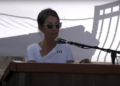
The significance of the event extends beyond a student recital. In a time of war and tension, the celebration of Arabic music served as proof that art can transcend conflict. One of Alsheik’s vocal students, Michelle Avlas said she was happy to bring her studies to the stage and described the school as a place where people can “just sing and play music without identity politics.”
“Before I came to the school, I didn’t know that this was what I wanted to do. They gave me the tools to see it. It’s bigger than doing music. They gave me the tools to see me,” said Avlas. “I came here to sing and I ended up learning to play the oud. I’m learning to put my steps on this world.”
Avlas noted that much of the music she and her peers studied are songs and sounds they recognize from home and from the streets of Israel — where cultural influences from the Arab world and even India play a larger role than one might think. After the modern State of Israel was born, waves of Jews from the Arabic-speaking world came to Israel. That includes some 250-350,000 Moroccans, 130,000 Iraqis, some 50,000 (with more arriving by foot even before the State was initially founded) and others coming from Tunisia, Algeria, Egypt, Syria and Lebanon.
This desire for inclusion lies at the heart of founder and director Shimon Shai’s vision for the center. For Shai, music offers people relief, enjoyment, and emotional connection. Shai says the school is more than just a school. The cultural center has a live music bar and library meant to preserve music. Israel’s Ministry of Culture supports the endeavor as well.
“I believe that if we know our neighbor’s culture, we look differently at them. They look differently at us. We can affect our reality in more than just the political layer. We actually do something that really, really affects people and brings people together,” Shai says.
Music, he added, is not simply entertainment, but “oxygen for our souls.”
Yehezkel also emphasized music’s emotional and spiritual capacity. He shared the idea that music is not merely a combination of notes, but elicits “waves of energy.”
“Listen to music not with your ears, but with your soul,” Yehezkel told the Israel Daily News.
To hear the sounds of the evening and more from the artists and organizers, listen to our full podcast episode – complete with musical recordings from the night. Our podcast can be heard on Spotify, Apple, Google or anywhere podcasts are distributed. You can see it on YouTube and with clips on our Instagram and TikTok.













Discussion about this post